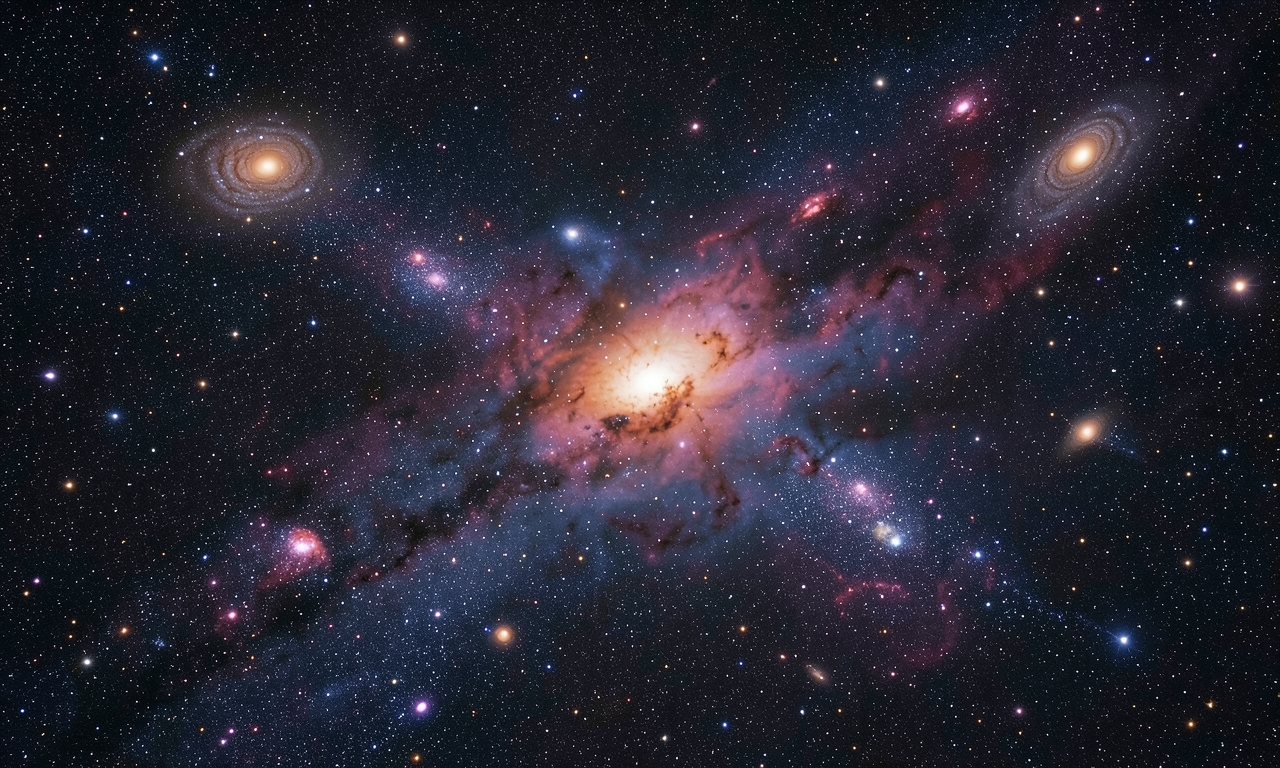
Comprehensive mapping of cosmic structures
After five years of observations, the South Pole Telescope (SPT) has produced a catalogue containing more than 7,000 galaxy clusters. Some of these structures date back nearly eight billion years, offering the most detailed map to date of the Universe’s largest assemblies.
Surprising signal within the data
While the primary goal was to chart mass distribution in the early Universe, the analysis revealed an unexpected pattern that informs how star‑formation rates changed over billions of years. This signal was not anticipated by the researchers.
Implications for star‑formation theory
The identified signature suggests that early star formation was not uniform but strongly modulated by the environment of galaxy clusters. Existing models of galaxy evolution and stellar birth may need to be revised accordingly.
Next steps in research
The team intends to cross‑check the findings with observations from other facilities and to run simulations that explore the underlying physical mechanisms. Such work will test the robustness of the newly discovered trend.
Relevance for cosmology
Combining an extensive cluster map with fresh insights into star formation provides a powerful tool for reconstructing the Universe’s history and for probing the interplay between large‑scale matter distribution and stellar birth processes.