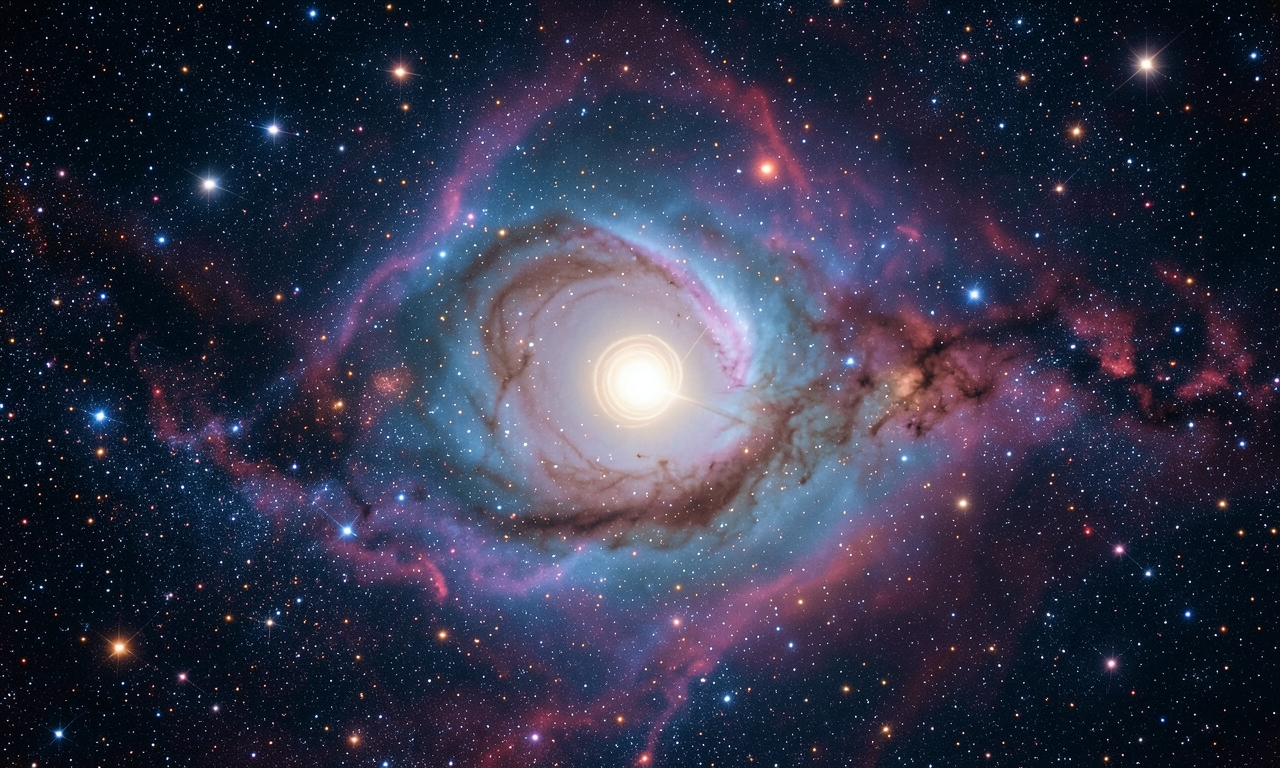
About thirty years ago an amateur astronomer observed a sudden increase in the brightness of a faint white dwarf that had previously been fading steadily. The unexpected jump in luminosity stood out against the normal cooling trend of such stellar remnants.
Recent analysis of archival photometry and spectroscopy indicates that the outburst is caused by a Very Late Thermal Pulse, a helium flash that ignites a thin helium shell long after the star has exhausted its main nuclear fuel. This late‑stage flash releases a large amount of energy into the stellar envelope.
The released energy heats the surface and boosts the luminosity by several orders of magnitude. Consequently the object is described as a “born again” star, having returned to a hot, luminous state after a period of cooling and dimming.
As the intense radiation drives away the outer layers, the star begins to show the strong winds and broad emission lines characteristic of Wolf‑Rayet objects, despite its low mass. These features are normally associated with much more massive, evolved stars.
Because the evolution proceeds on timescales of years to decades, astronomers can monitor the changes in near‑real time. This provides a rare laboratory for studying late evolutionary phases of low‑mass stars that are usually hidden in much longer timescales.