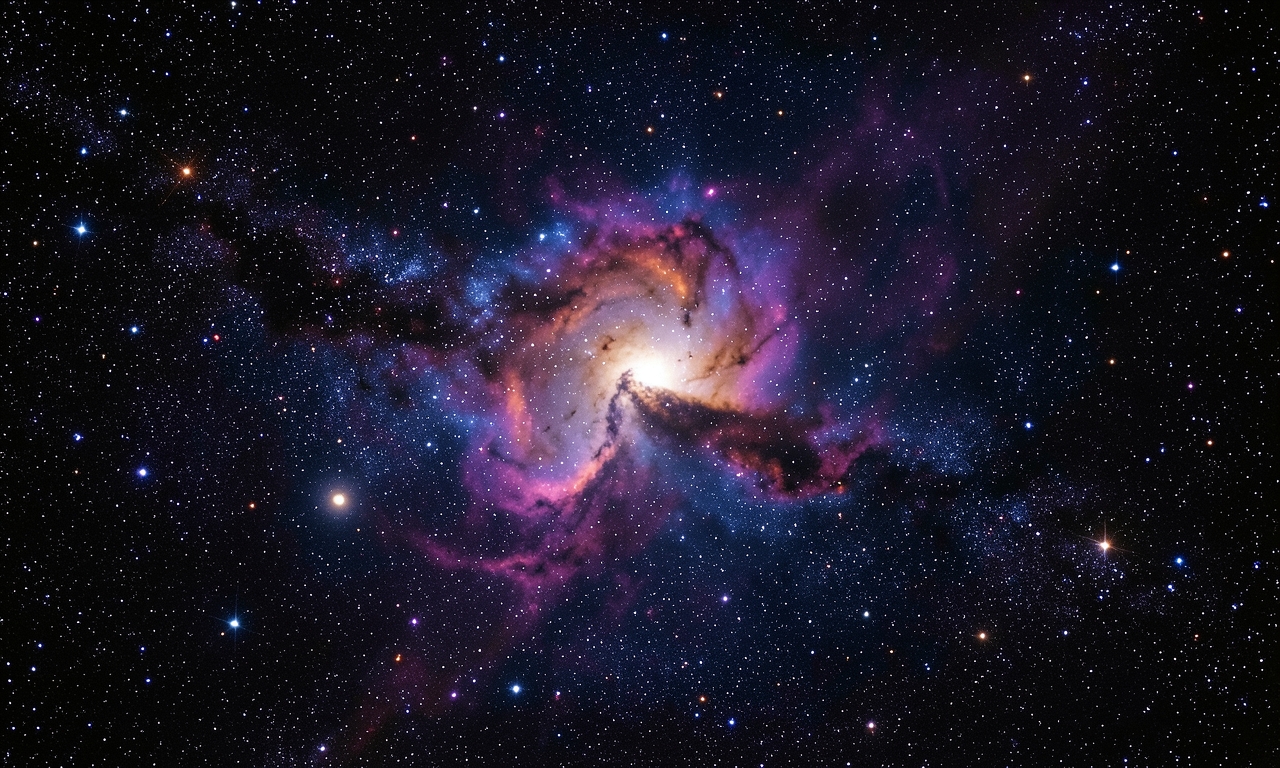
A surprising oasis in a chaotic region
The core of the Milky Way is known for extreme activity: interstellar gas streams at supersonic speeds, creating a hostile environment for star formation. Nevertheless, observations with the Atacama Large Millimeter/submillimeter Array (ALMA) have revealed a localized zone where the gas slows down and begins to condense.
Observational approach
High‑resolution millimetre‑wave interferometry allowed researchers to map the kinematics of the central molecular zone. The resulting data highlighted a distinct area with markedly reduced turbulence and lower temperature, where compact gas clumps are forming – potential seeds of future stars.
Implications for stellar birth
The finding suggests that the earliest stages of star formation can proceed under similar physical conditions even within a highly disturbed galactic nucleus. It also supports the hypothesis that our Sun may have originated in a comparable calm pocket before migrating to its present orbit.
Next steps
Further ALMA campaigns, complemented by infrared and radio observations, aim to determine how common such tranquil islands are in the galactic centre and quantify their contribution to the overall star‑formation rate.