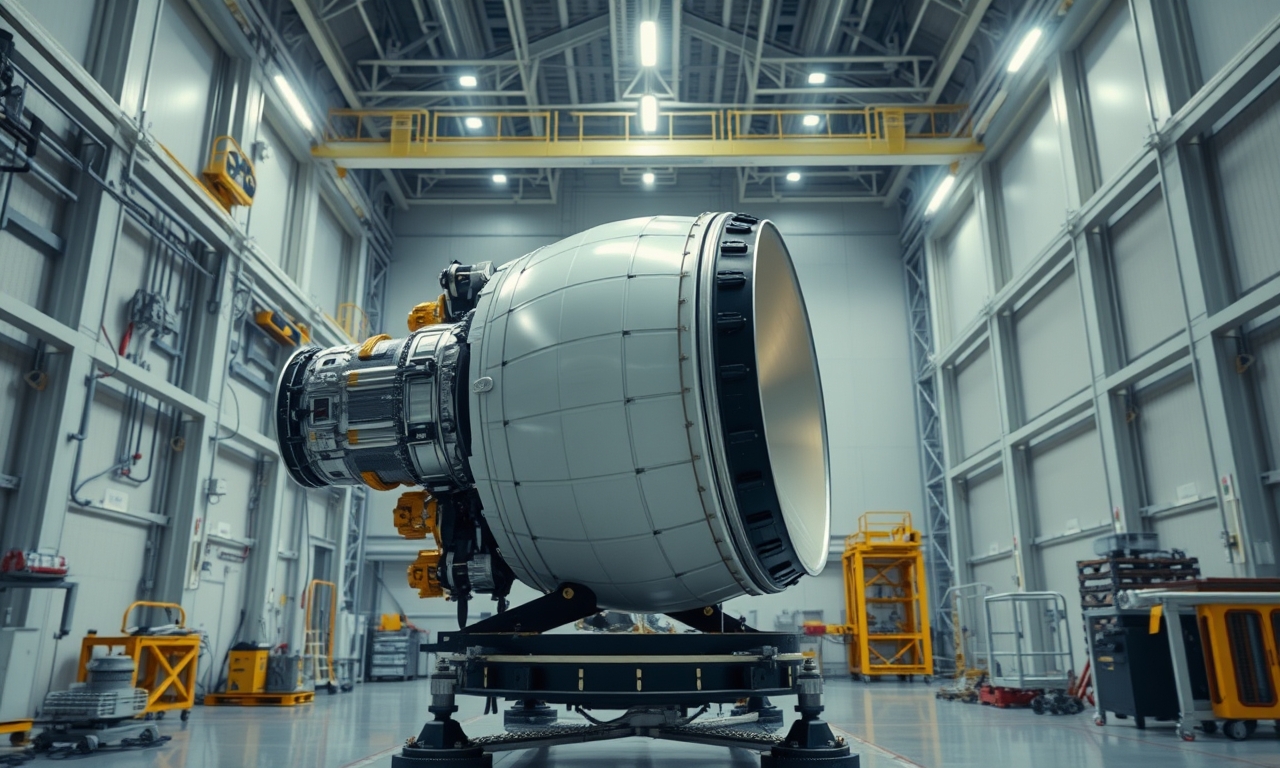
Formation of a VLEO industry alliance
Beijing has officially created a national industry alliance dedicated to very low Earth orbit (VLEO) activities. The alliance is intended to coordinate research, manufacturing and operational efforts for satellites operating below 300 km, fostering technology transfer among companies, research institutes and government bodies.
Satellites achieve long‑term performance
Recent missions have shown that Chinese satellites can maintain continuous operation in VLEO despite the higher atmospheric drag and rapid orbital decay. The successful demonstrations indicate that modern propulsion and stabilization systems are capable of sustaining orbits at these altitudes.
Funding flows to propulsion startups
At the same time, several emerging firms developing electric and chemical thrusters for VLEO have closed significant financing rounds. The new capital is earmarked for accelerating the development of high‑efficiency propulsion solutions required to counteract drag in ultra‑low orbits.
Strategic relevance for China
Focusing on VLEO aligns with China’s broader space strategy, which seeks to enable applications such as high‑resolution Earth observation, rapid data downlink and global communications constellations. By establishing a structured industry alliance, Beijing aims to strengthen its competitive edge in the international race for next‑generation space technologies.
Future outlook
The alliance plans to launch additional test missions and to develop standards for VLEO operations over the coming years. Analysts expect that the combination of state backing and private investment will speed up the maturation of VLEO capabilities.