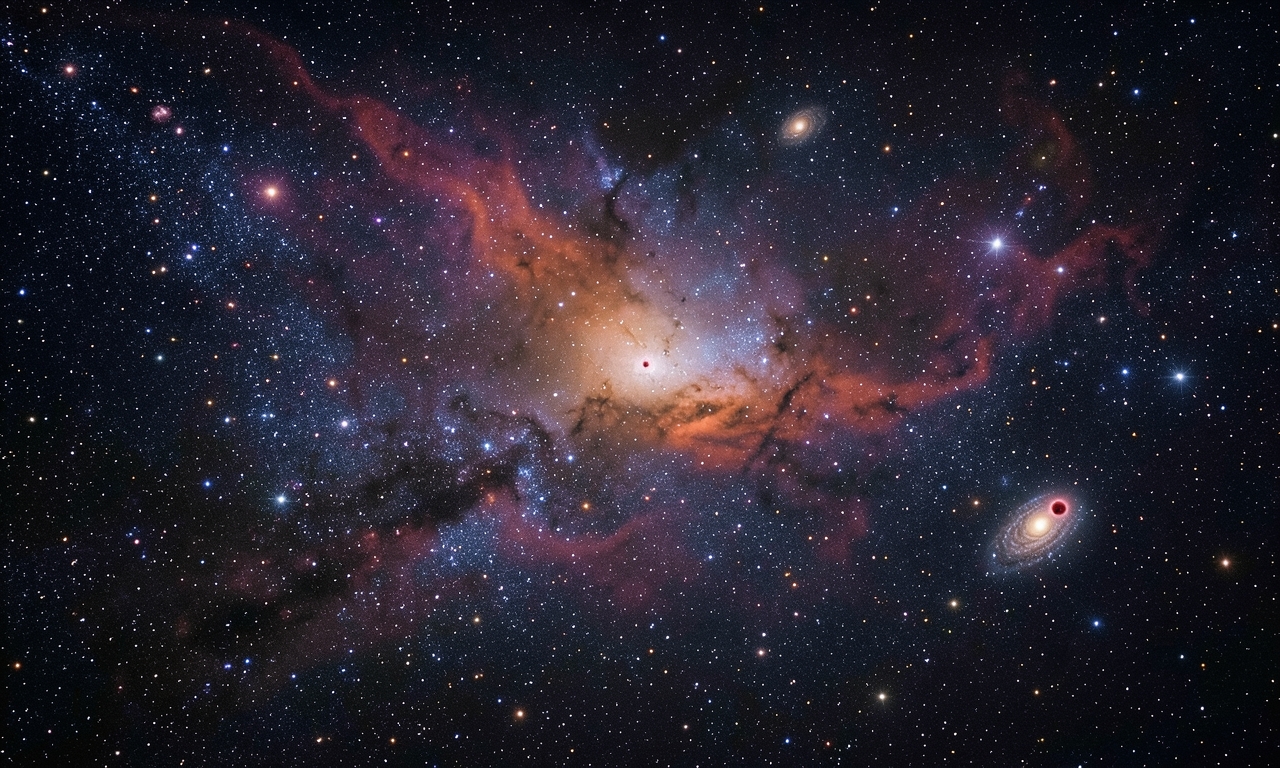
The James Webb Space Telescope (JWST) has carried out several deep surveys of the very distant universe, probing the epoch just after the Big Bang.
During these observations the telescope’s infrared detectors have picked up numerous faint objects that appear small and red in the images, leading researchers to nickname them “Little Red Dots”.
Since their initial discovery in 2024, more than 300 of these sources have been catalogued, and scientists are analysing their light to learn about the first generations of stars and galaxies.
The objects’ compact size and strong red colour suggest they could be very young systems that have not yet built up substantial stellar populations.
Future JWST observations and complementary facilities will help determine whether the Little Red Dots represent nascent galaxies, hidden black holes, or other exotic phenomena in the infant cosmos.