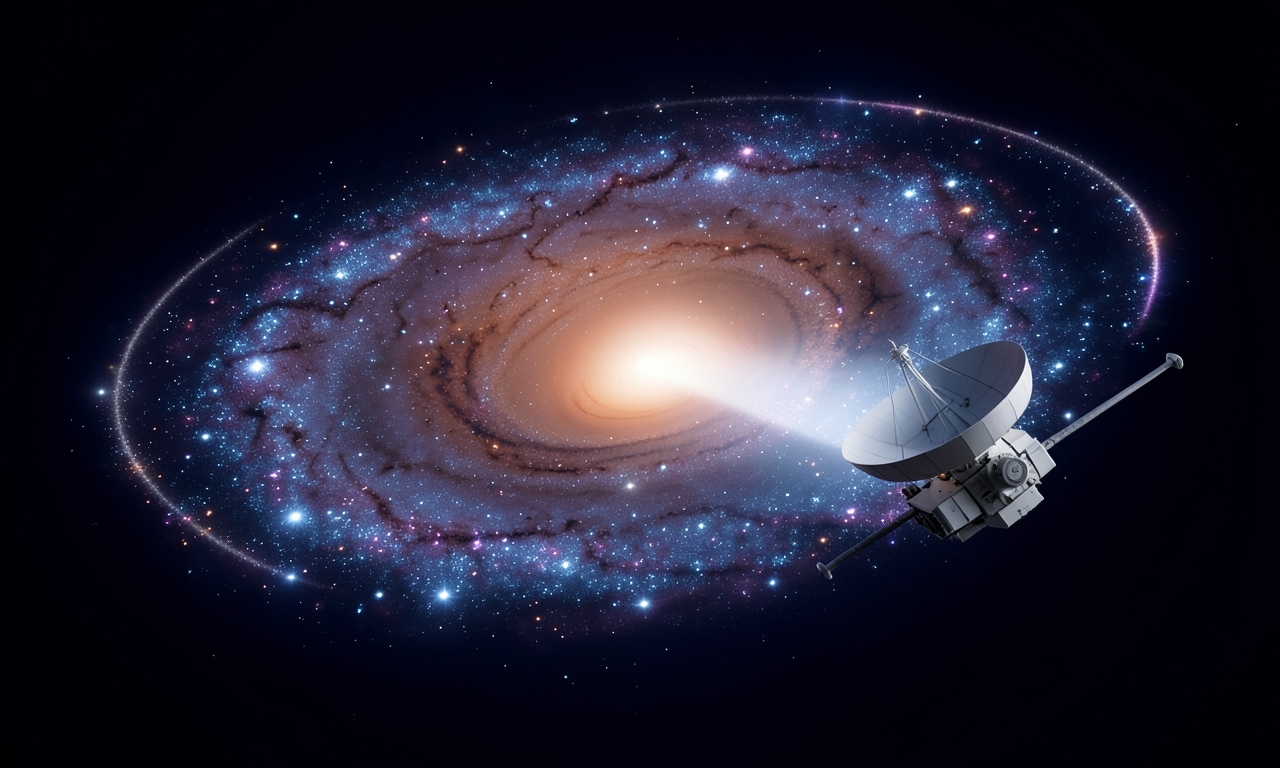
A mass threshold for galactic growth
Observational surveys have revealed that once a galaxy exceeds a critical mass, its rate of star formation drops dramatically or stops altogether, even though substantial reservoirs of gas and dust remain in its halo. This pattern is evident across diverse galaxy populations, from spiral disks to massive ellipticals.
Potential physical mechanisms
Several explanations have been proposed. A leading hypothesis points to energetic feedback from a central supermassive black hole—an active galactic nucleus (AGN)—which can emit radiation and high‑energy particles that heat the surrounding gas, preventing it from cooling and collapsing into new stars. Another model emphasizes the heating of virialized gas within the dark‑matter halo, which likewise inhibits cooling.
Role of supernova feedback
Explosions of massive stars also contribute to star‑formation shutdowns. Supernovae can stir and expel the interstellar medium, reducing the density needed for gravitational collapse. In the most massive systems, the combined effect of frequent supernovae and AGN activity may permanently deplete the cold gas supply.
Unresolved issues and future work
Determining which of these processes dominates in any given galaxy remains an open challenge. Upcoming observations with infrared and X‑ray facilities, such as the James Webb Space Telescope, alongside advanced cosmological simulations, aim to pinpoint the conditions that trigger the so‑called “kill switch.”