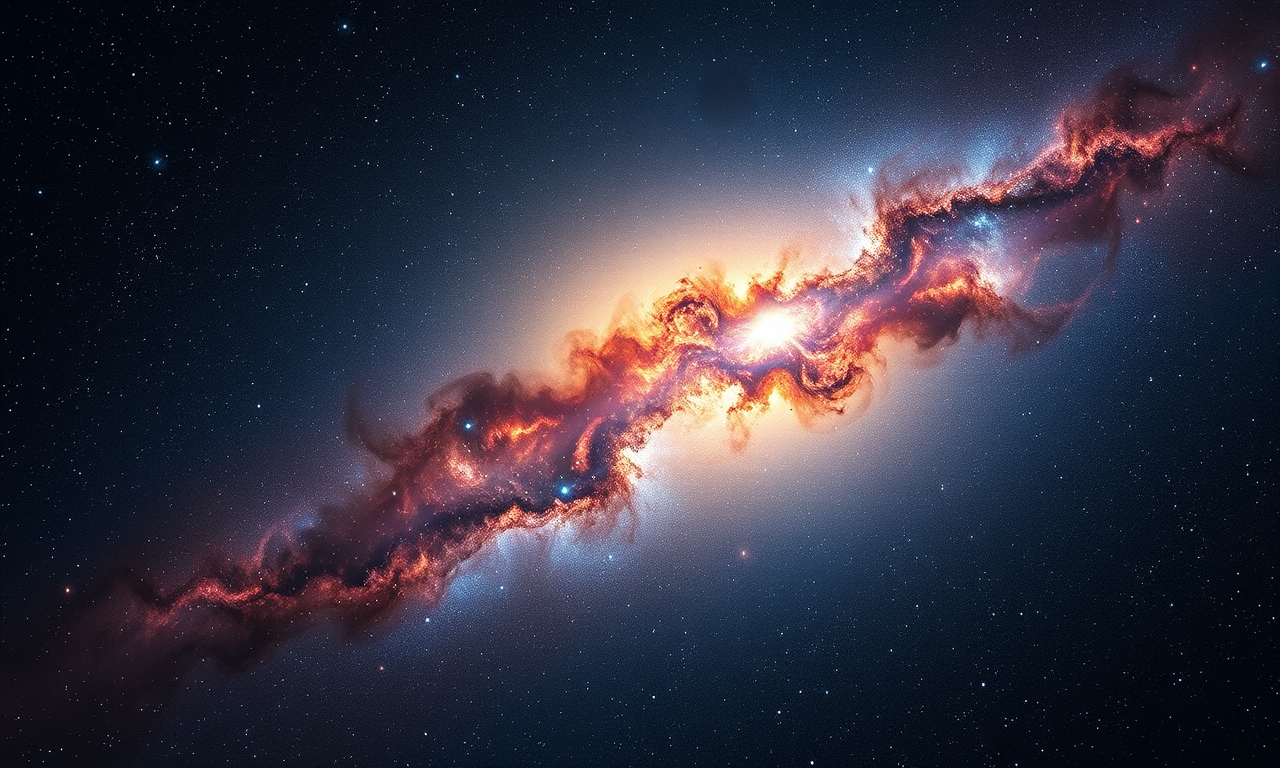
Euclid delivers detailed view of the Galactic Center
The European Space Agency has published a new image of the Milky Way’s core obtained by its Euclid astrophysics mission. The picture reveals the densely packed stellar region surrounding the supermassive black hole Sagittarius A* with unprecedented clarity.
Supporting the forthcoming Roman observatory
These observations will serve as a reference for the Roman Space Telescope, slated for launch in the coming years by NASA. By comparing Euclid’s imagery with Roman’s planned survey strategies, astronomers can fine‑tune target selection and calibration procedures.
Scientific relevance
The high‑resolution data enable studies of star formation, dark‑matter distribution, and the dynamics of the central region. They also provide insight into the environment of the central black hole, a key element for models of galactic evolution.
Future prospects
When combined with Roman’s visible and infrared observations, the Euclid dataset is expected to deepen our understanding of the Milky Way’s structure and history, opening new avenues for galactic research.