A Historic Discovery
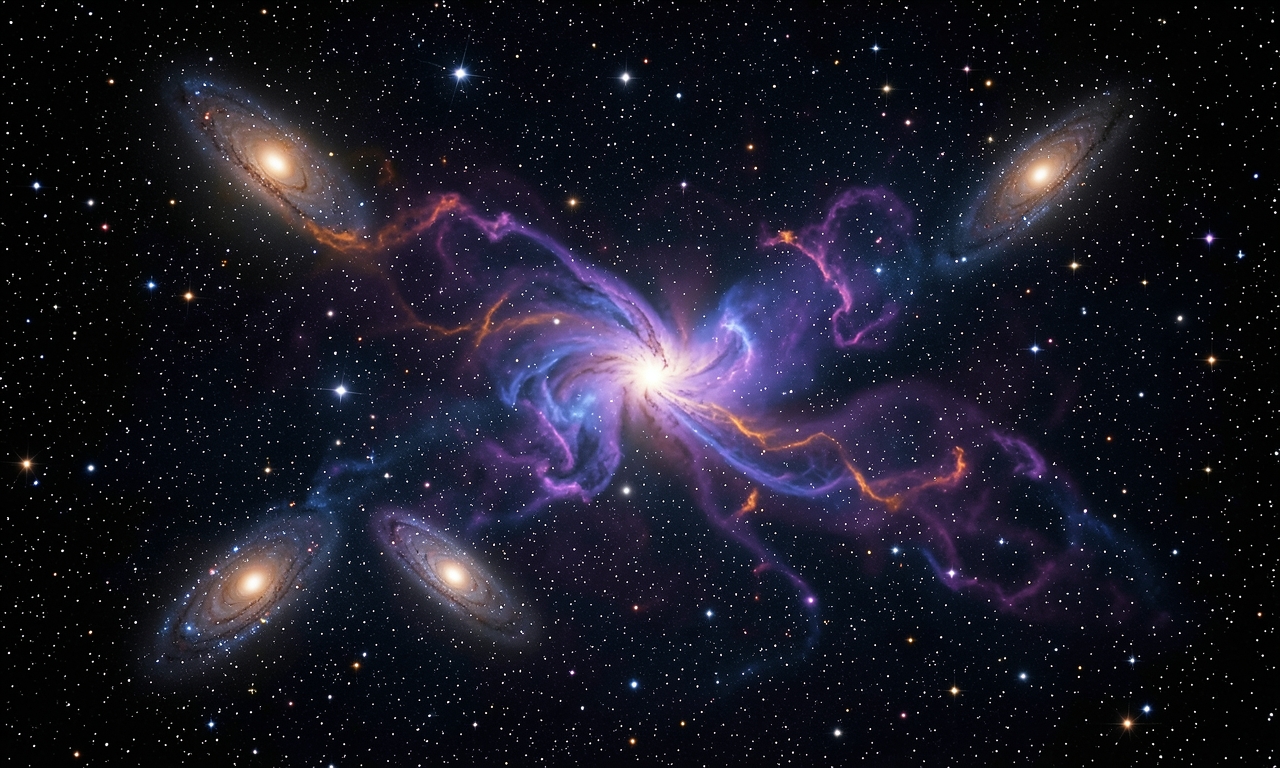
The European Euclid observatory has detected an extremely distant quasar whose age is estimated at roughly 13.1 billion years. This makes the object one of the earliest known active galactic nuclei, offering fresh insight into the formation of supermassive black holes shortly after the Big Bang.
Observations and Analysis
The finding results from a combination of infrared and optical data collected during Euclid’s wide‑field sky survey. Spectroscopic measurements revealed a redshift of about z ≈ 7.5, corresponding to a light‑travel distance exceeding 13 billion light‑years.
Implications for Cosmology
This quasar provides a crucial benchmark for models of early galaxy evolution. Its existence suggests that, within a few hundred million years after the Big Bang, conditions allowed rapid growth of massive black holes. The observations support scenarios in which dense gas reservoirs fueled intense accretion in the universe’s first few billion years.
Future Work
Following the identification, the Euclid team plans follow‑up observations with the James Webb Space Telescope and ground‑based facilities to refine the object’s physical characteristics. Coordinated efforts across multiple observatories aim to deepen our understanding of the earliest phases of cosmic structure formation.