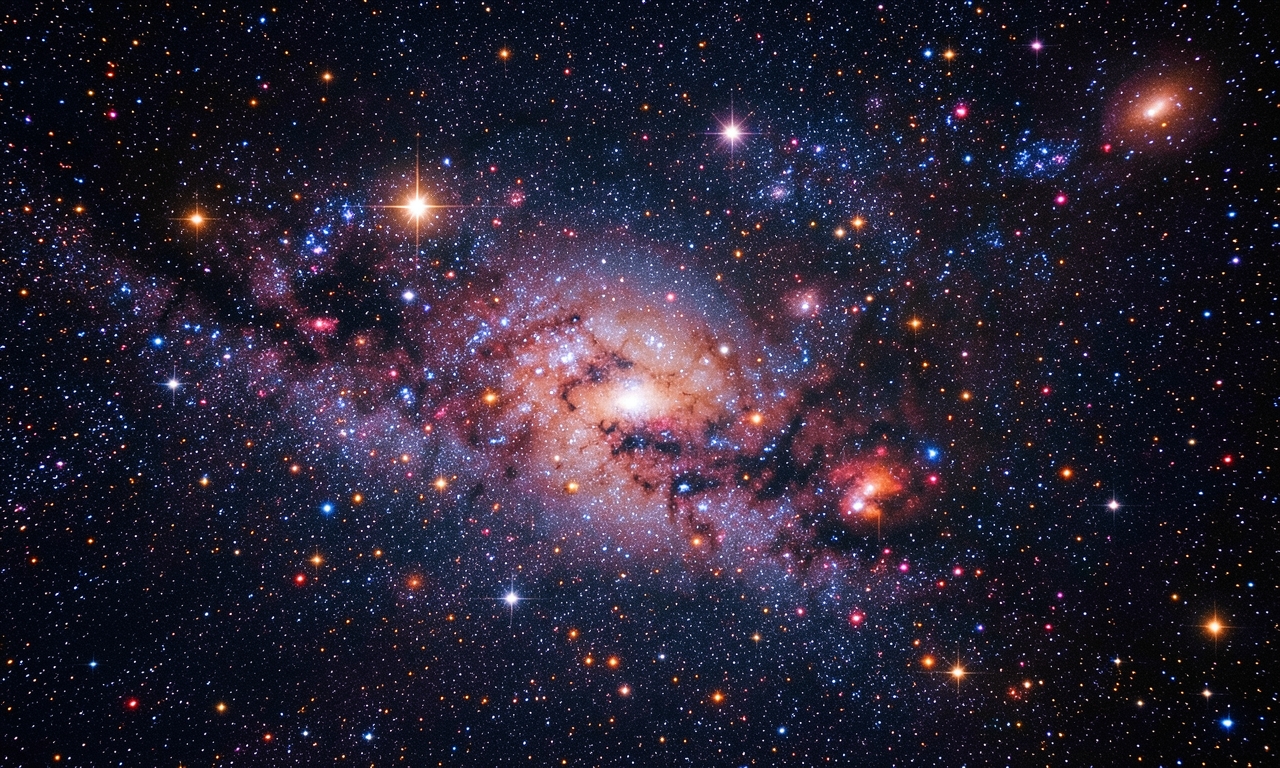
A Unprecedented Stellar Panorama
Three years after launch, the European Space Agency’s Euclid observatory has delivered a vast mosaic of the Milky Way’s inner region. In just 26 hours of exposure, tens of millions of stars were stitched together into a seamless image that shows the galactic centre with unprecedented clarity.
From Birth Clouds to Ancient Bulge
The composite captures a wide range of galactic environments, from dark molecular clouds where new stars are forming to the densely packed, old stellar populations of the bulge. This variety provides a chronological map of stellar evolution across billions of years.
Hidden Worlds Detected
The telescope’s sensitivity also reveals signatures of thousands of previously unseen exoplanets orbiting the surveyed stars, offering new targets for follow‑up observations.
Scientific Impact
Researchers will use the detailed map to study star formation processes, mass distribution in the galactic core, and the characteristics of the newly identified planetary candidates. Combined with data from other missions, Euclid’s findings will deepen our understanding of the Milky Way’s structure and history.