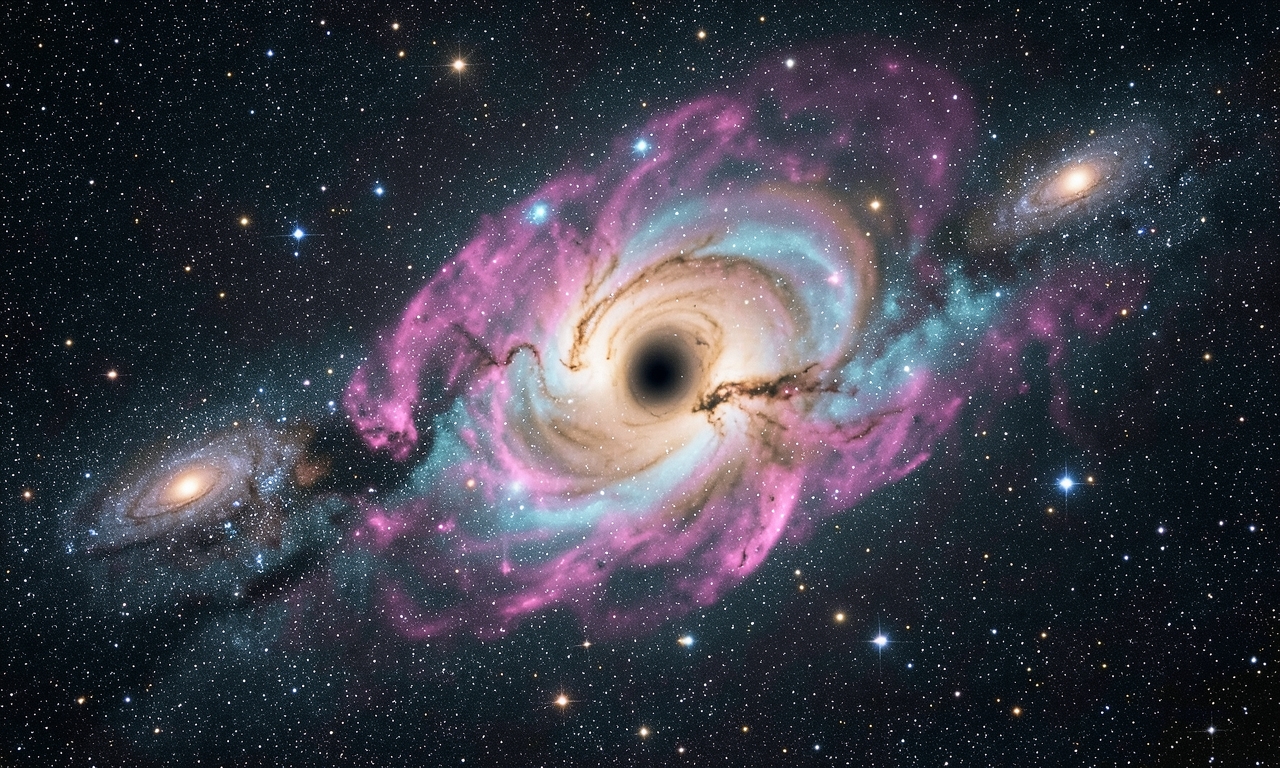
First Evidence of a Black Hole Found in Globular Cluster Omega Centauri
For decades scientists have puzzled over the lack of black holes in the massive globular cluster Omega Centauri, where theory predicts many remnants of massive stars should reside. Direct evidence had been missing, leaving a longstanding mystery.
By analysing archival images from the Hubble Space Telescope and adding observations from the James Webb Space Telescope, a research team identified the gravitational signature of a stellar‑mass black hole inside the cluster. The stars’ motions revealed the presence of a compact, massive object.
This discovery provides crucial clues about how black holes form and evolve in dense stellar environments. It allows existing formation models to be tested and refined under extreme conditions.
The results appear in The Astrophysical Journal Letters and help close the gap in the observed black hole population of Omega Centauri.
Future work will use additional telescope data and simulations to measure the black hole’s mass and spin, and to search for similar objects in other globular clusters to build a fuller picture of black hole demographics.