Visibility Overview
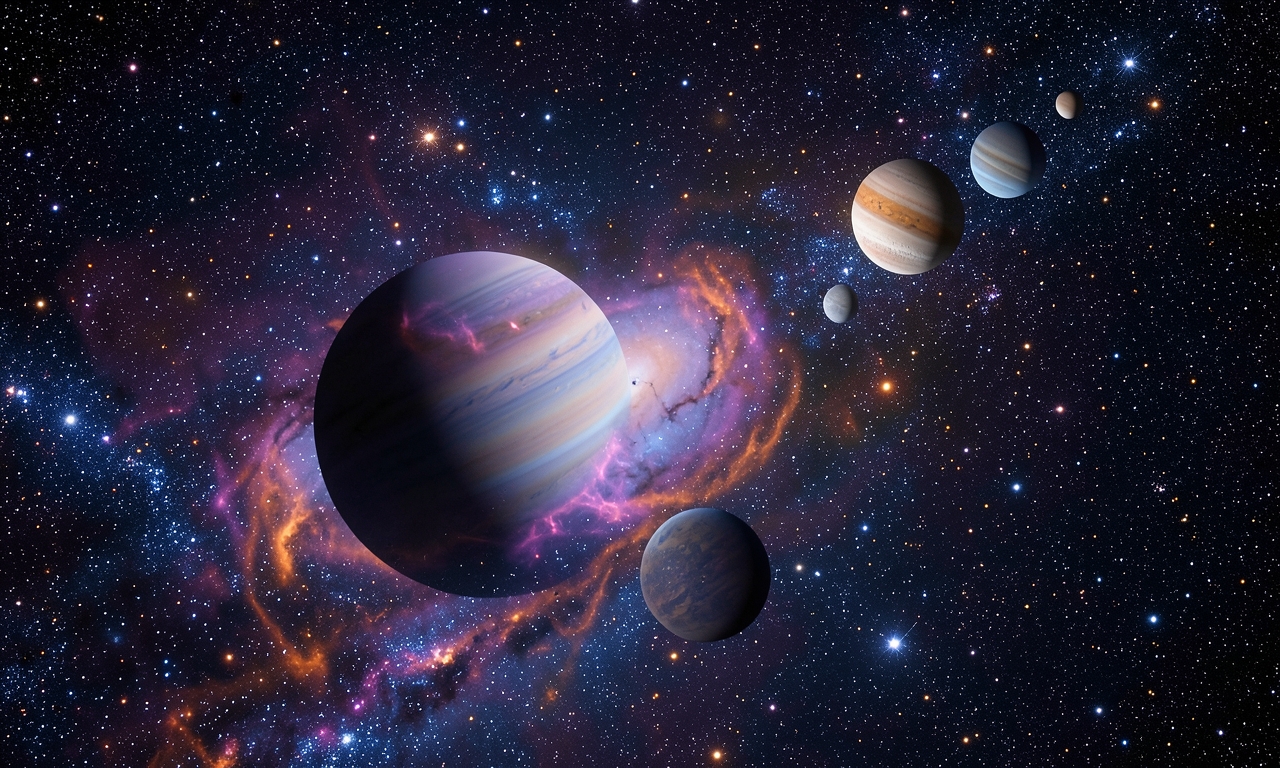
In September the five bright planets Mercury, Venus, Mars, Jupiter and Saturn appear together in the evening sky. Their positions shift gradually, making them observable at different times throughout the month.
Mercury usually shows up shortly after sunset low on the western horizon and is only easily seen for a few days before it disappears into the Sun’s glare. Venus remains prominent as either a morning or evening star for a longer stretch, reaching its greatest elongation around mid‑month.
Mars appears in the southeast with its reddish hue and can be traced across the sky all month, climbing higher as September progresses. Jupiter, the largest planet, dominates the southeastern sky after sunset and stays visible well into the night.
Saturn completes the lineup; while its rings require optical aid, the planet itself shines as a pale yellowish‑white object low in the southwest. For optimal viewing choose a site with low light pollution and an unobstructed horizon. A quick look after sunset often suffices to spot all five planets in succession.