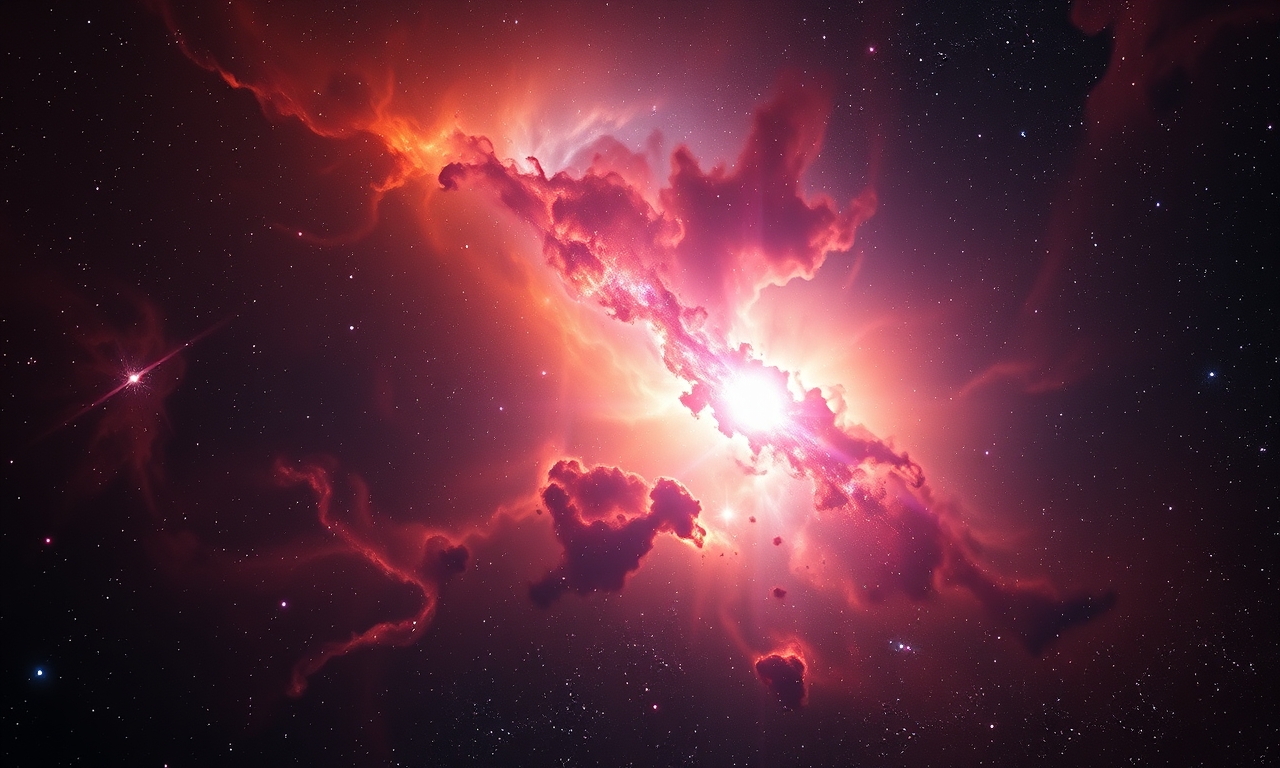
Discovery of an Early‑Universe Quasar
An international consortium of astronomers has reported the detection of quasar J0439+1634, whose light originates from a period roughly 850 million years after the Big Bang. The object was captured using high‑resolution infrared and radio observatories that recorded its characteristic flickering emission.
Physical Characteristics
Analysis of the variable luminosity indicates that the central supermassive black hole is surrounded by a relatively flat, pancake‑like accretion disk. This geometry mirrors that of many lower‑redshift quasars, despite J0439+1634 being among the earliest known examples.
Implications for Black‑Hole Growth
The presence of a mature accretion structure at such an early cosmic epoch challenges existing models of black‑hole formation. Theories must account for how a black hole could amass sufficient mass and develop a stable, thin disk in under a billion years.
Future Observations
Planned observations with the James Webb Space Telescope and next‑generation facilities aim to probe the environmental conditions of J0439+1634 in greater detail, testing whether flat accretion disks were common among the first quasars.