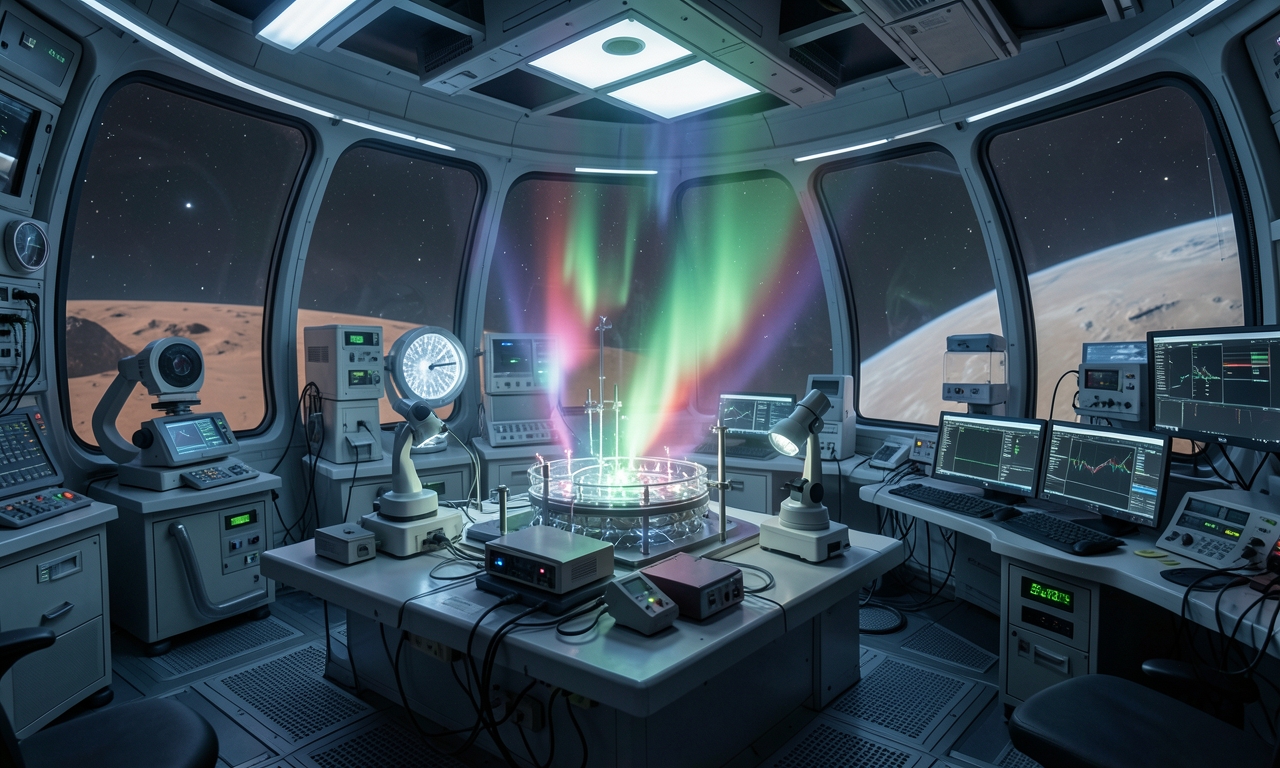
Solar Storm and Atmospheric Loss
On July 23, 2026 an illustration showed how charged particles from a solar storm can strip away the upper layers of the Martian atmosphere. This process is one of the mechanisms that explain the long‑term loss of gases from the Red Planet. The observations come from data collected by NASA’s MAVEN mission, which has been studying the interaction between the solar wind and the Martian atmosphere since its launch.
Parallels to Aurora Formation
MAVEN researchers found that certain kinds of Martian auroras are produced in a similar way to the atmospheric loss described above. When energetic solar‑wind particles encounter the planet’s weak magnetic field, they can excite electrons in the ionosphere, which then emit light – the observed aurora.
- MAVEN observed solar‑storm particles stripping the Martian atmosphere.
- Certain Martian auroras arise from the interaction of solar wind with the weak magnetic field.
- The same process accounts for both atmospheric loss and light emission.
Implications for Mars Research
Understanding these processes helps scientists reconstruct the evolution of the Martian atmosphere over billions of years and provides valuable input for future missions that aim to assess surface conditions and habitability.
Outlook for Human Exploration
For planned crewed missions to Mars, knowledge of solar‑storm effects is essential to estimate radiation doses and develop protective measures. MAVEN data help identify risks early and plan mitigation strategies.