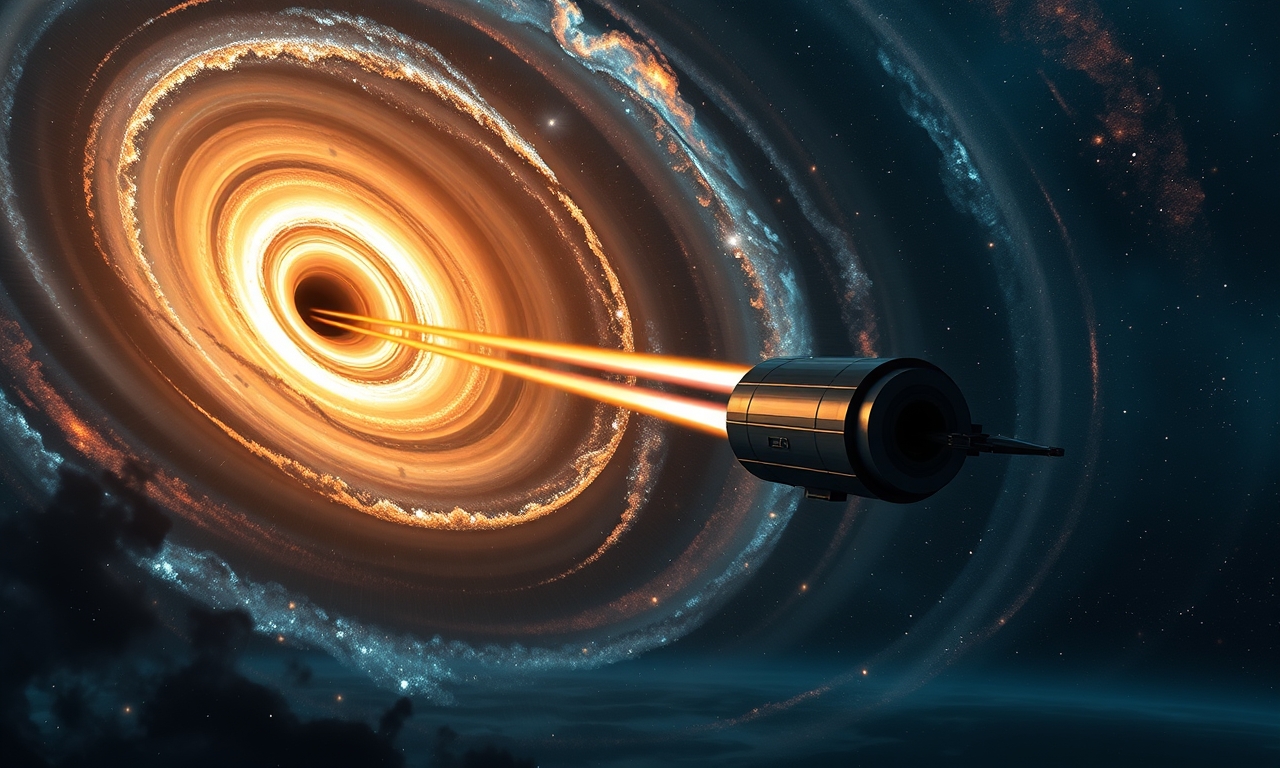
The Role of Supermassive Black Holes
Almost every large galaxy, including the Milky Way, harbors a supermassive black hole (SMBH) at its core. These objects attract gas, dust, and stars, creating accretion disks whose heat and radiation profoundly affect the surrounding medium.
Feedback Processes
Energy released by SMBHs—whether as radiation, relativistic jets, or thermal outflows—feeds back into the galaxy. This feedback controls the amount of material available for star formation, sometimes ejecting gas entirely from the galactic nucleus or merely heating and redistributing it.
Observational Challenges
Capturing these interactions requires high‑resolution data. Although the James Webb Space Telescope (JWST) offers unprecedented sensitivity, only a limited number of galaxies are close or bright enough for detailed study. The analysis of such data is key to understanding how SMBHs influence galactic morphology and star‑forming rates.
Future Directions
Current research focuses on modeling the interplay between SMBHs and their environments. By integrating observations, simulations, and theory, astronomers aim to construct a comprehensive picture of galaxy evolution across cosmic time.