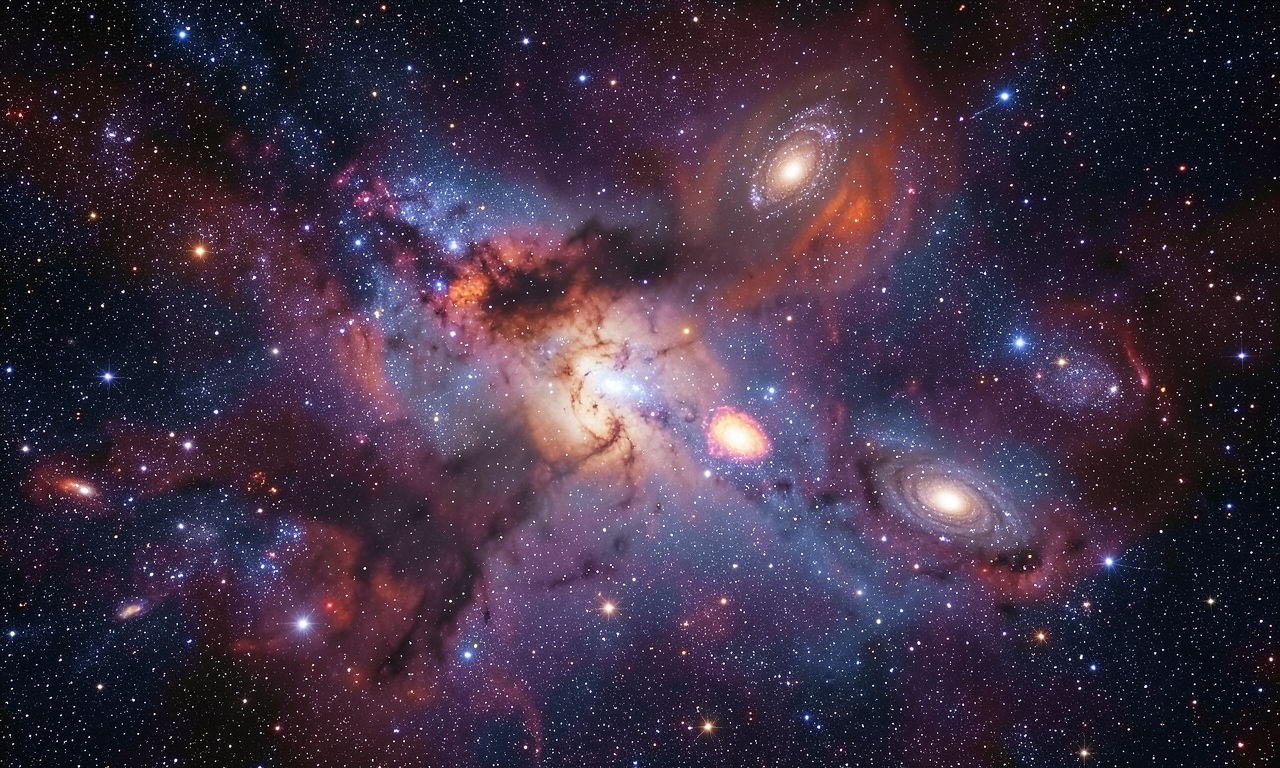
Discovery of an Unusual Galaxy
The Hubble Space Telescope has obtained an image of a distant galaxy that is presently blowing away the surrounding intergalactic hydrogen. This phenomenon, in which a young stellar system expels the primordial hydrogen fog that permeated the early universe, has been rarely observed directly.
Physical Context
Following the Big Bang, a dense hydrogen cloud filled the cosmos. In regions of star formation, intense radiation and stellar winds ionize and sweep away this material. The observed galaxy appears to be in a stage where these processes are especially vigorous.
Observational Details
The picture results from long‑exposure observations in the visible and near‑infrared bands. The data reveal distinct outflow structures that tear through the ambient medium. The galaxy’s distance is estimated at several billion light‑years, highlighting Hubble’s sensitivity.
Implications for Cosmology
This finding provides direct evidence of how early galaxies shaped the intergalactic medium and contributed to the epoch of reionization. Detecting such activity in extremely remote objects helps refine models of early‑universe evolution.
Future Prospects
Upcoming observations with the James Webb Space Telescope and other next‑generation facilities will probe the dynamics of similar galaxies in greater detail, improving our understanding of star‑formation feedback and its role in cosmic history.