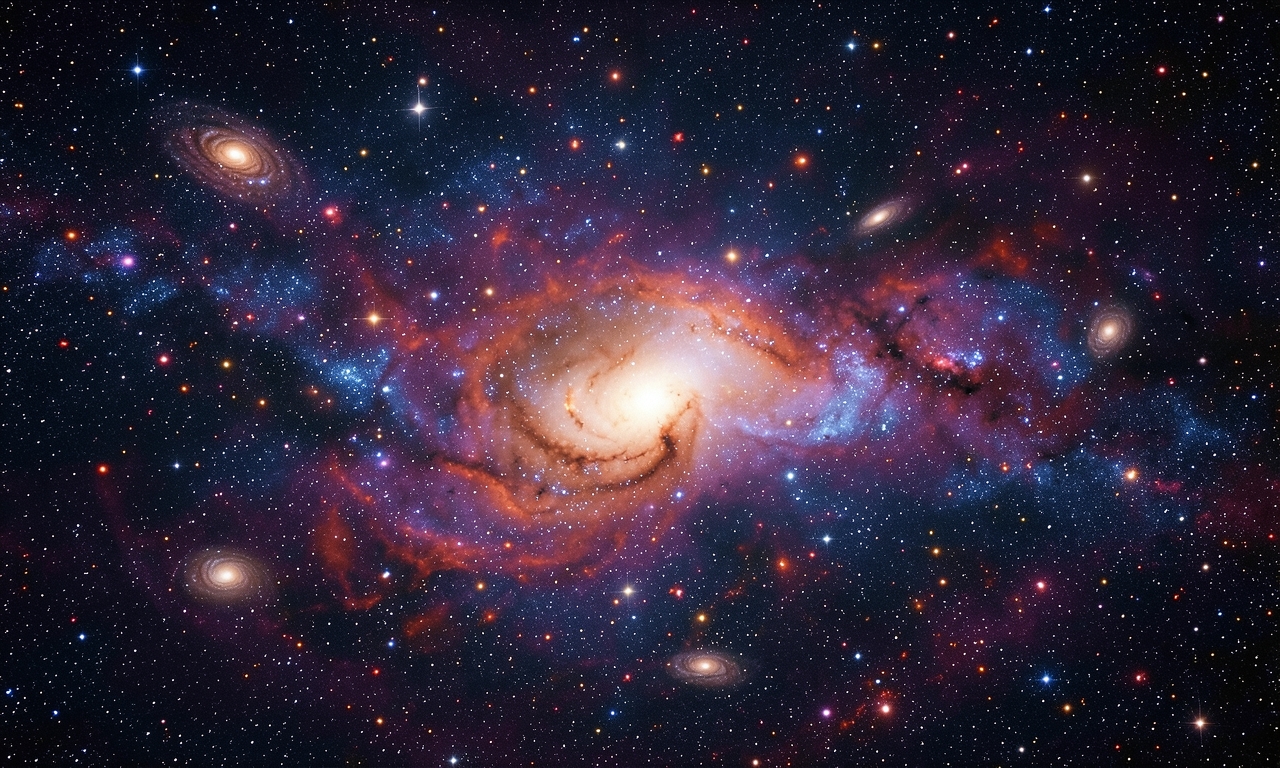
Hubble’s View of Galaxy NGC 4698 in the Virgo Constellation
The NASA/ESA Hubble Space Telescope has captured a new image of the spiral galaxy NGC 4698, located roughly 55 million light‑years away in the constellation Virgo. NGC 4698 is a member of the Virgo Cluster, the nearest large gathering of galaxies, which contains over a thousand individual systems.
At first glance NGC 4698 appears tranquil: its spiral arms are clearly defined and the starlight is smoothly distributed across the disk. Nevertheless, astronomers suspect that this outward calm masks a more complex and dynamic interior.
Observations suggest that the gas and stars do not rotate in perfect equilibrium, hinting at past gravitational encounters with neighboring galaxies or internal instabilities. Such deviations from equilibrium are key clues for studying how galaxies evolve within dense environments like the Virgo Cluster.
Furthermore, the internal motions may affect the galaxy’s star‑formation rate. Regions where gas is compressed could give rise to new stars, while areas subjected to shear might experience suppressed star formation. This interplay of order and disorder makes NGC 4698 a valuable laboratory for understanding galactic life cycles.
Continued analysis of the Hubble data will aim to pinpoint the exact nature of the internal disturbance and clarify how external forces reshape the structure of spiral galaxies. Insights from NGC 4698 could help refine models of galaxy interactions within clusters.