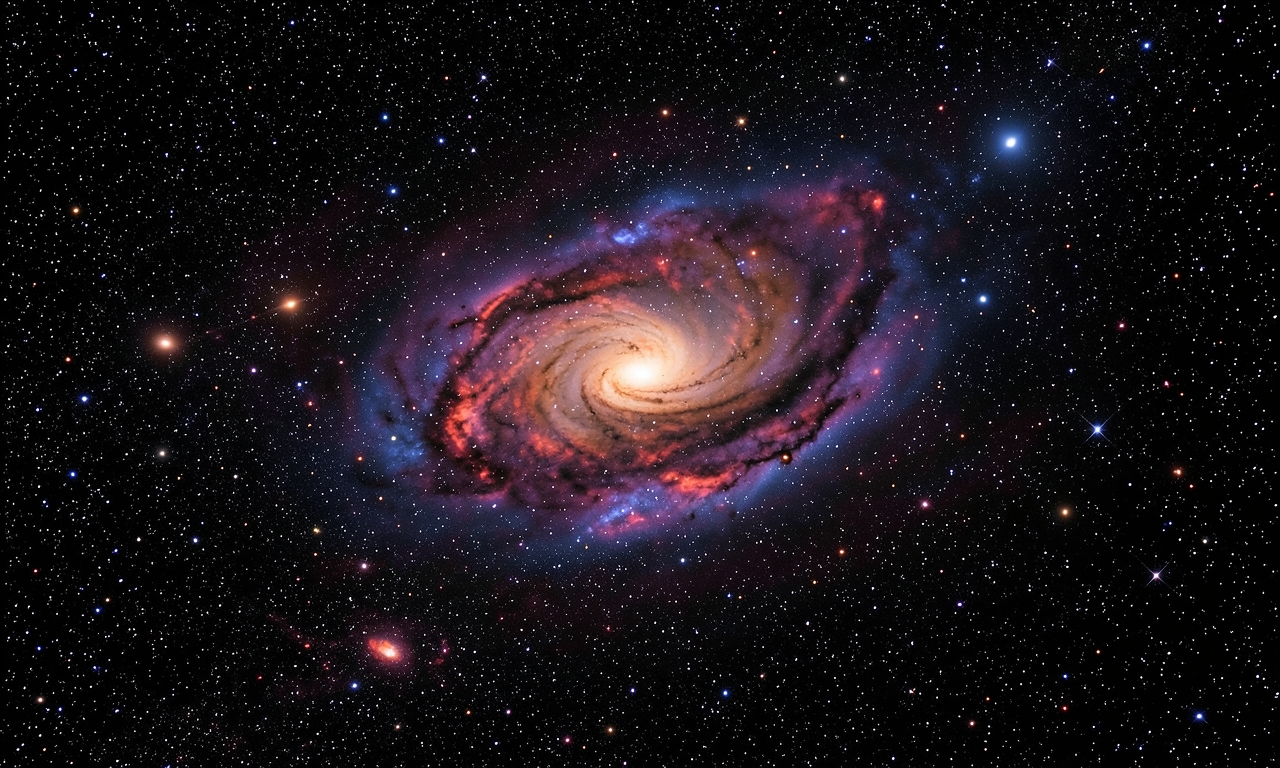
The Hubble Space Telescope observed a prominent superbubble in the Large Magellanic Cloud in September 2026, revealing a vast region of hot, ionized gas.
Spanning several hundred light‑years, the structure formed from the combined pressure of fast stellar winds from massive stars and the energy released by numerous supernova explosions.
Such superbubbles act as key feedback agents, shaping the surrounding interstellar medium by displacing gas and thereby influencing the rate and location of subsequent star formation.
These observations improve our understanding of galactic‑scale processes in nearby systems and provide valuable constraints for simulations of stellar evolution and cosmic chemical enrichment.