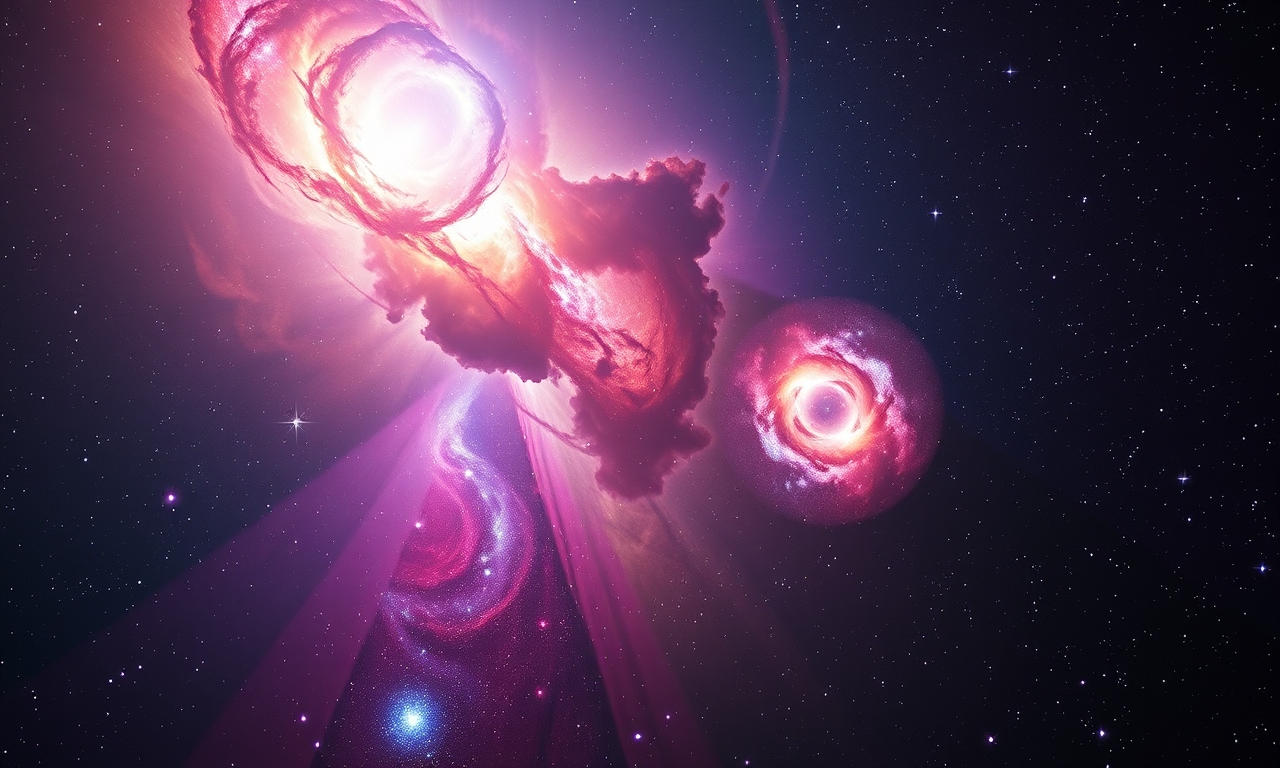
Unprecedented view of galactic collisions
The James Webb Space Telescope (JWST) has imaged a distant region where six distinct galaxies are in the process of coalescing into a single, extraordinarily massive system. The observations illustrate how stars, gas, and dark matter are redistributed during the merger.
Formation of a supermassive black hole
At the heart of the emerging structure, a supermassive black hole is identified, gaining mass as material from the merging galaxies falls inward. This provides direct evidence of black‑hole growth linked to large‑scale galactic assembly.
Scientific implications
The data offer critical insight into how the most massive galaxies formed in the early universe, allowing astronomers to refine evolutionary models and assess the influence of central black holes on galaxy‑scale dynamics.
Future observations
The team intends to monitor the object over multiple JWST observation cycles to track its continued evolution. Complementary observations at other wavelengths will be integrated to build a comprehensive picture of the merger.