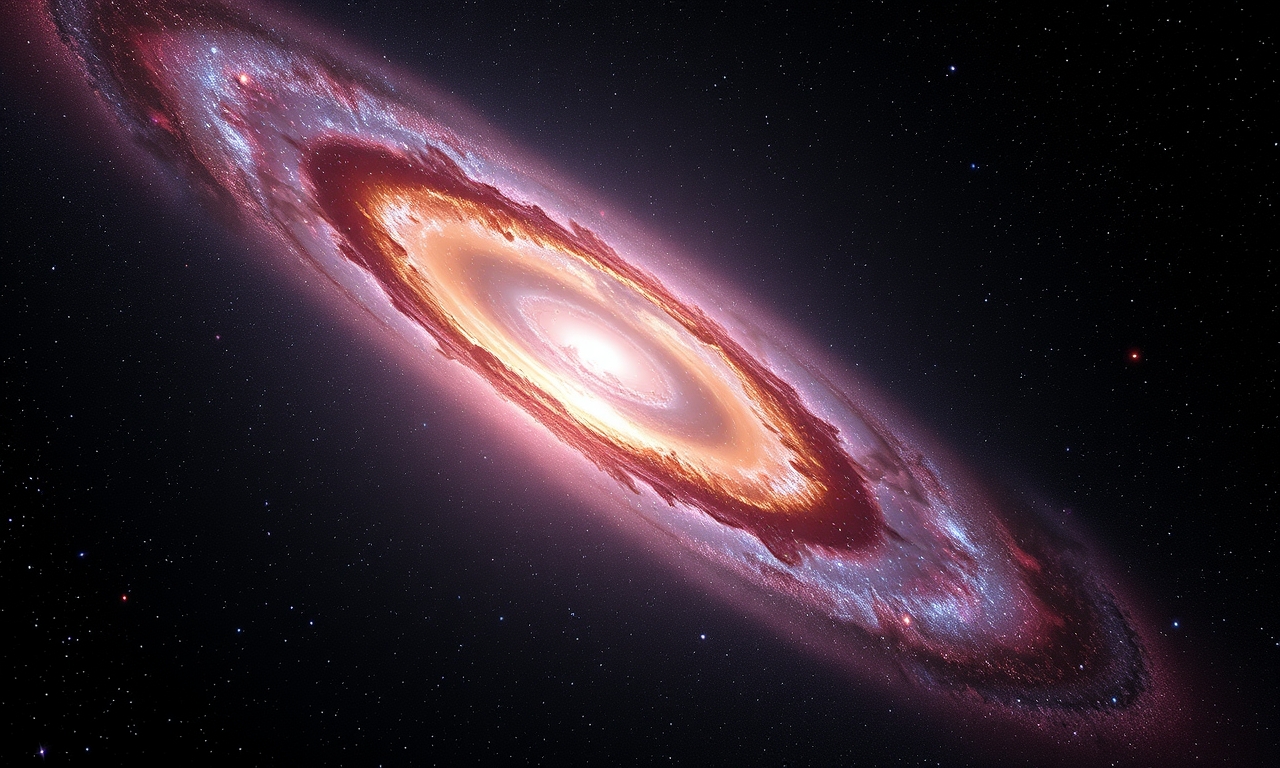
A fresh perspective on the Cigar Galaxy
The James Webb Space Telescope (JWST) has recently targeted the edge‑on starburst galaxy Messier 82, popularly called the Cigar Galaxy. By capturing infrared light, JWST can penetrate the dense dust clouds that have long hidden the galaxy’s central star‑forming regions.
Complementing earlier observations
The new infrared data were merged with archival images from the Hubble Space Telescope. While Hubble’s visible‑light images reveal intricate structures, JWST adds depth by exposing young star clusters and the distribution of gas and dust concealed within.
Insights into star‑formation activity
Findings indicate that massive star‑formation episodes are concentrated in a compact core, surrounded by intense radiation fields and powerful galactic winds. These forces expel material from the nucleus, creating the characteristic outflows previously detected in M82.
Implications for astrophysics
Integrating JWST’s infrared view with Hubble’s optical data provides a more comprehensive understanding of the mechanisms driving star formation in highly active galaxies. The results will help refine theoretical models of star‑cluster evolution and the interaction between stars and the interstellar medium.