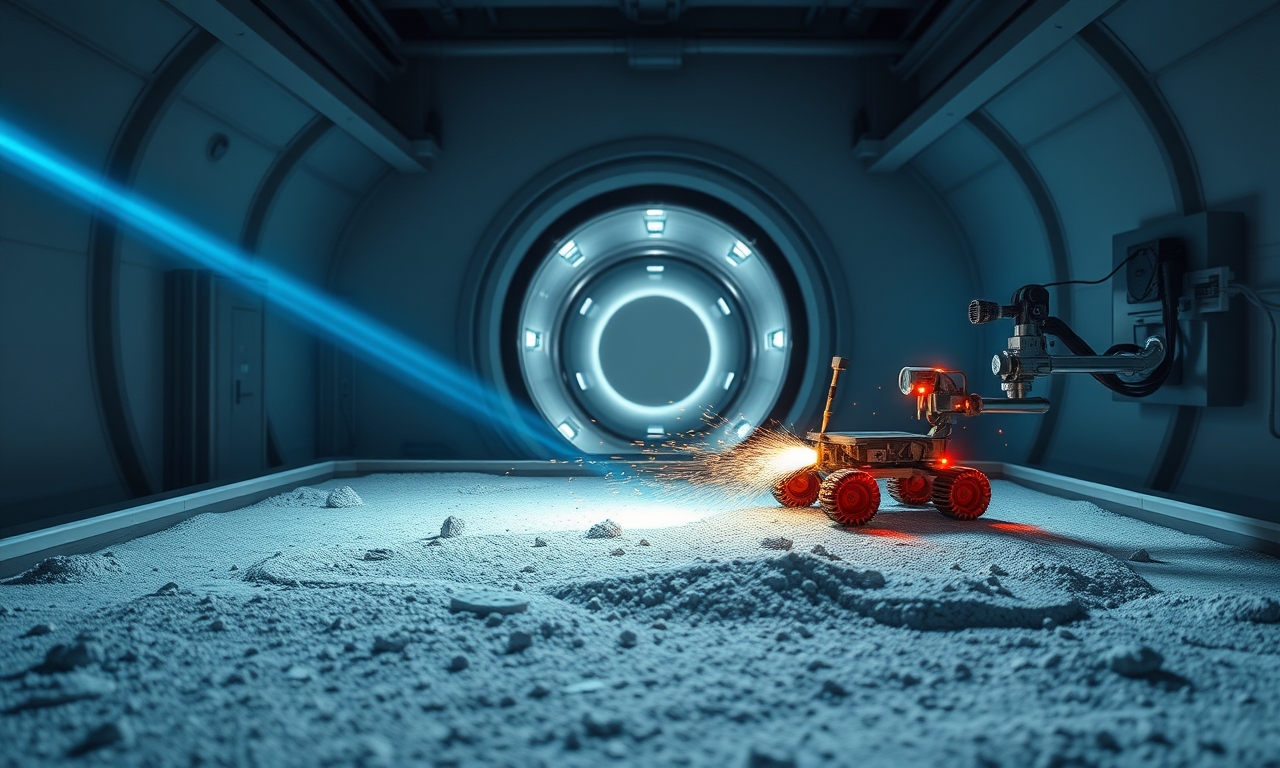
Simulating Solar Wind in the Laboratory
The Moon, though appearing unchanged from afar, is continuously reshaped by microscopic impacts and a steady stream of solar particles—a process known as space weathering. Researchers at Georgia Tech have recreated this environment in a controlled laboratory setting to study the evolution of the lunar surface.
Methodology and Findings
By bombarding lunar analog material with a simulated solar wind, the team observed how the surface changes over time. Their results, published in The Planetary Science Journal, demonstrate that solar wind particles significantly alter the Moon’s surface structure.
Implications for Lunar Science
These findings are crucial for interpreting data from lunar missions, helping scientists estimate the age of surface features and understand how water-related compounds might form on the Moon—an important consideration for future exploration.
Future Directions
The study paves the way for more detailed experiments on solar wind interactions with lunar material, potentially revealing how water could be produced on the Moon and informing the design of future manned missions.