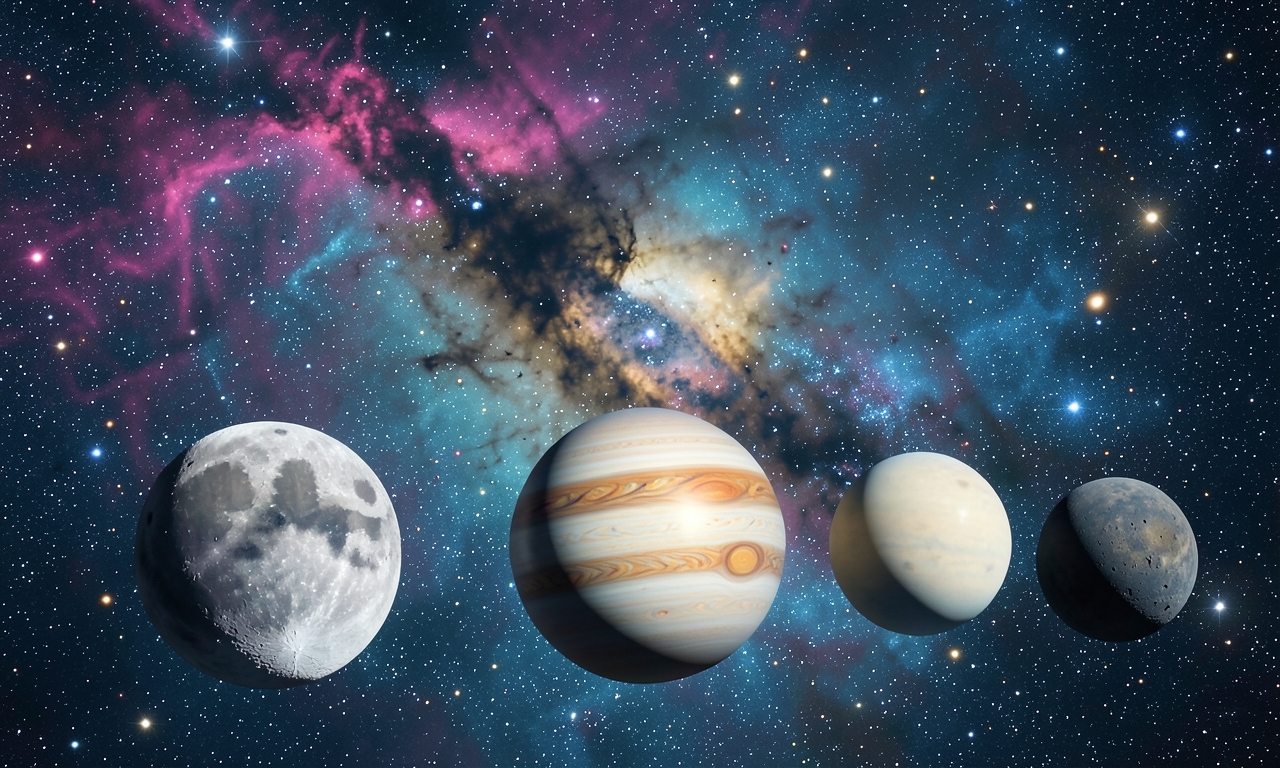
A noteworthy sky event
As the waxing crescent moon rises in the western sky on June 17, it will traverse the Beehive open star cluster (M44). At the same time three of the brightest planets—Jupiter, Venus and Mercury—will be positioned nearby, offering a compelling target for amateur astronomers and photographers.
Location and visibility
The Moon will be about 30 % illuminated and will appear shortly after sunset in the western horizon. Jupiter will be located in the constellation Aquarius, Venus in Gemini, and Mercury close to the Sun in Taurus. All four objects are visible to the naked eye; a pair of binoculars or a small telescope will resolve the dense star field of M44.
Observation tips
- Find a dark site with an unobstructed view to the west.
- Use binoculars with at least 7× magnification to locate the Beehive Cluster.
- For long‑exposure photography, a sturdy tripod and a camera with manual exposure control are recommended.
Why this alignment is rare
The Moon passes through M44 only once every few years. The simultaneous visibility of Jupiter, Venus and Mercury makes this particular alignment especially photogenic, a phenomenon that has intrigued observers for centuries.