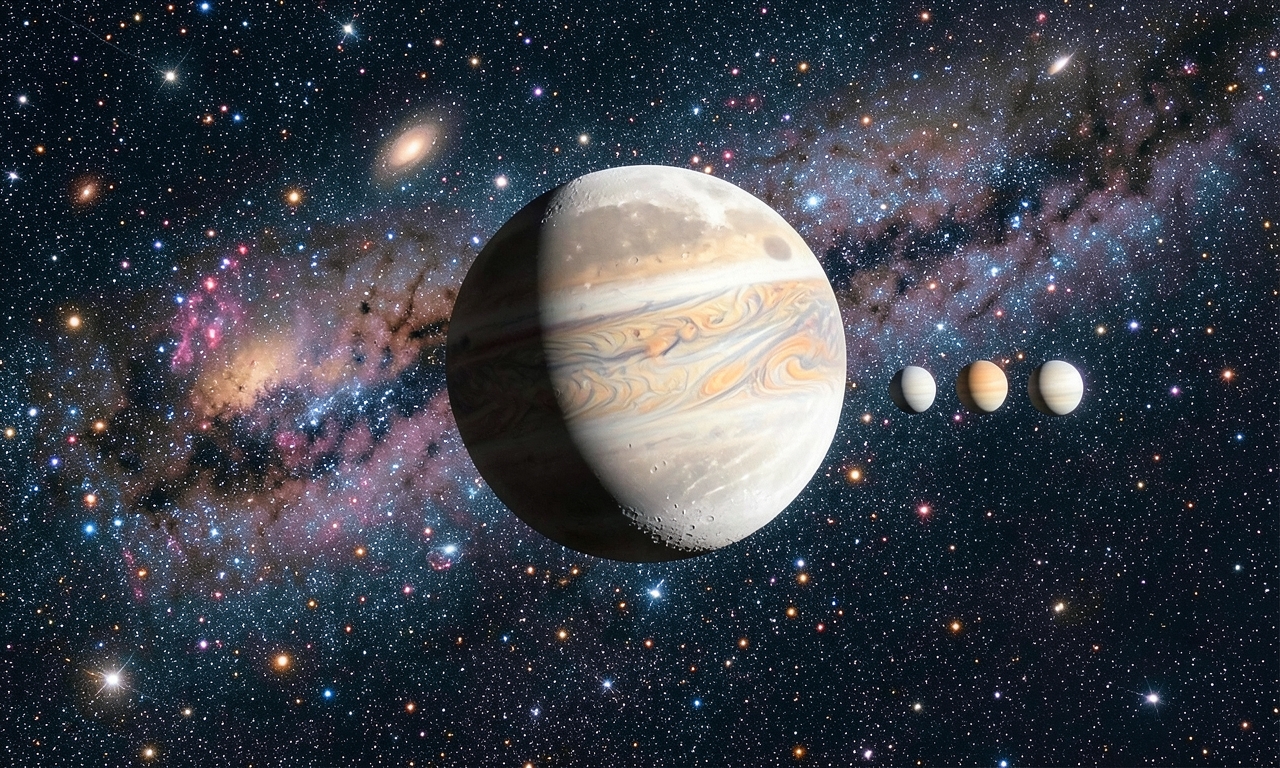
On the morning of September 8, the Moon moves across the sky and encounters the bright planet Jupiter. This alignment results in an occultation where the Moon temporarily hides Jupiter from view. Although the event occurs during daylight, it can be seen with the naked eye under the right conditions.
The occultation begins around 05:30 CET, depending on the observer's location, and lasts only a few minutes. The Moon's apparent motion of about 0.5 degrees per hour causes Jupiter to disappear behind the lunar disc and then reappear shortly afterward. Exact timing varies slightly with latitude and longitude.
How to observe the event
- Find an open site with a clear eastern view where the pre‑dawn sky is still dark enough.
- Binoculars or a small telescope enhance the view, but the phenomenon is also detectable without optical aid.
- Make sure the Sun has not yet risen or is low on the horizon to maximize contrast.
- Note the time to record the moment Jupiter vanishes and reappears.
Daytime occultations of a bright planet such as Jupiter are uncommon because daylight usually overwhelms the contrast. This event offers a fine chance to watch the Moon’s motion and planetary alignments. A similar occultation will not occur again for several years.