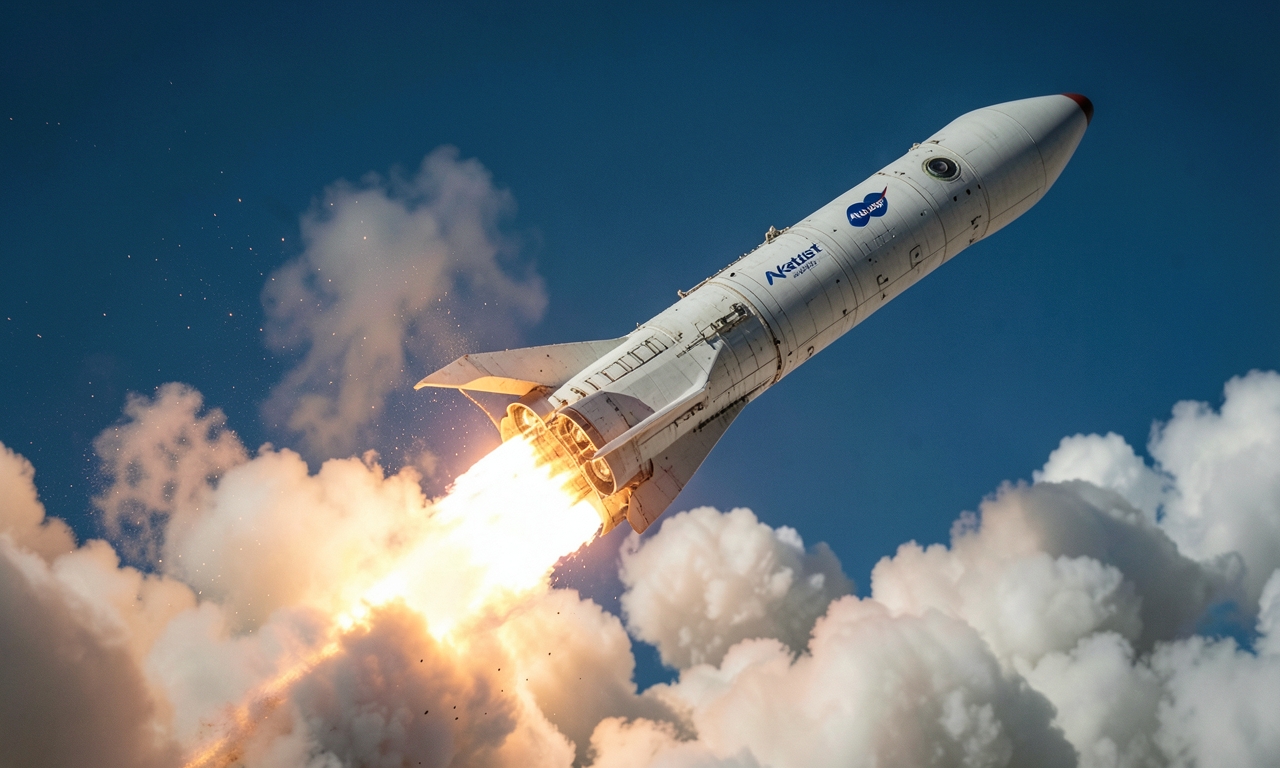
NASA and Katalyst Space Adjust Plans for LINK Mission
Due to an ongoing attitude control problem on the commercial spacecraft, NASA and Katalyst Space announced on Wednesday that the LINK vehicle will not proceed with its originally planned capture and boost of an agency satellite to a higher altitude. The maneuver was intended to extend the science mission of the targeted spacecraft.
Despite the setback, the agencies said LINK will still attempt a rendezvous and proximity operations demonstration with NASA’s Neil Gehrels Swift Observatory. The maneuver aims to validate the spacecraft’s ability to approach and operate near another satellite without physical contact.
Officials noted that the attitude control issue remains under investigation and that any future boost attempts will depend on resolving the technical difficulty. They emphasized that the proximity test will provide valuable data for future commercial servicing missions.
The Swift Observatory, launched in 2004, continues to study gamma‑ray bursts and other high‑energy phenomena from low Earth orbit. Its continued operation supports a broad range of astrophysical research.
- LINK will not perform a capture‑and‑boost maneuver.
- Rendezvous and proximity operations with Swift are still planned.
- The attitude control fault is being investigated.
- Future boost attempts depend on fixing the issue.
- The test will yield data for upcoming commercial servicing missions.