Background
For more than a decade planetary scientists have noted a conspicuous scarcity of exoplanets with radii around 1.8 times that of Earth. Current catalogs separate most discovered worlds into two groups: smaller, rocky bodies termed “super‑Earths” and larger, lower‑density planets called “sub‑Neptunes.”
Why the Bifurcation?
Although the gap is well documented, the physical mechanisms that drive this bifurcation remain uncertain. Proposed explanations include rapid atmospheric loss driven by stellar irradiation, differences in core‑to‑envelope mass ratios, or divergent formation pathways, but observational evidence is lacking.
The EVE Concept
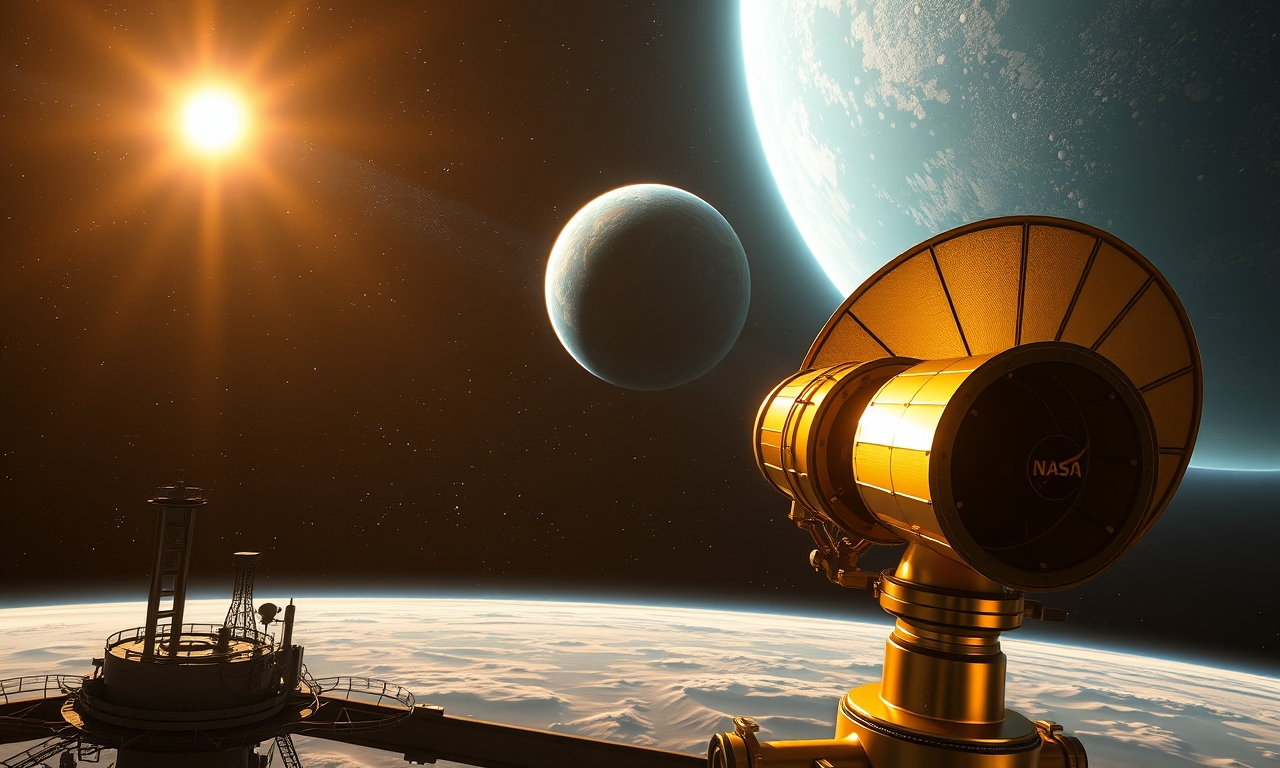
NASA has submitted a mission concept named Early eVolution Explorer (EVE). A pre‑print describing the design is available on arXiv. The mission would deploy a space‑based telescope optimized for detecting transiting planets in the critical radius range and performing high‑resolution spectroscopy of their atmospheres.
Objectives
EVE aims to quantify the occurrence rate of planets near 1.8 Earth radii, measure their bulk densities, and characterize atmospheric composition. These data will test whether rapid atmospheric stripping or other evolutionary processes are responsible for the observed radius valley.
Prospects
Still in the proposal phase, EVE could provide the decisive observations needed to advance models of planetary evolution and finally explain the radius‑valley phenomenon.