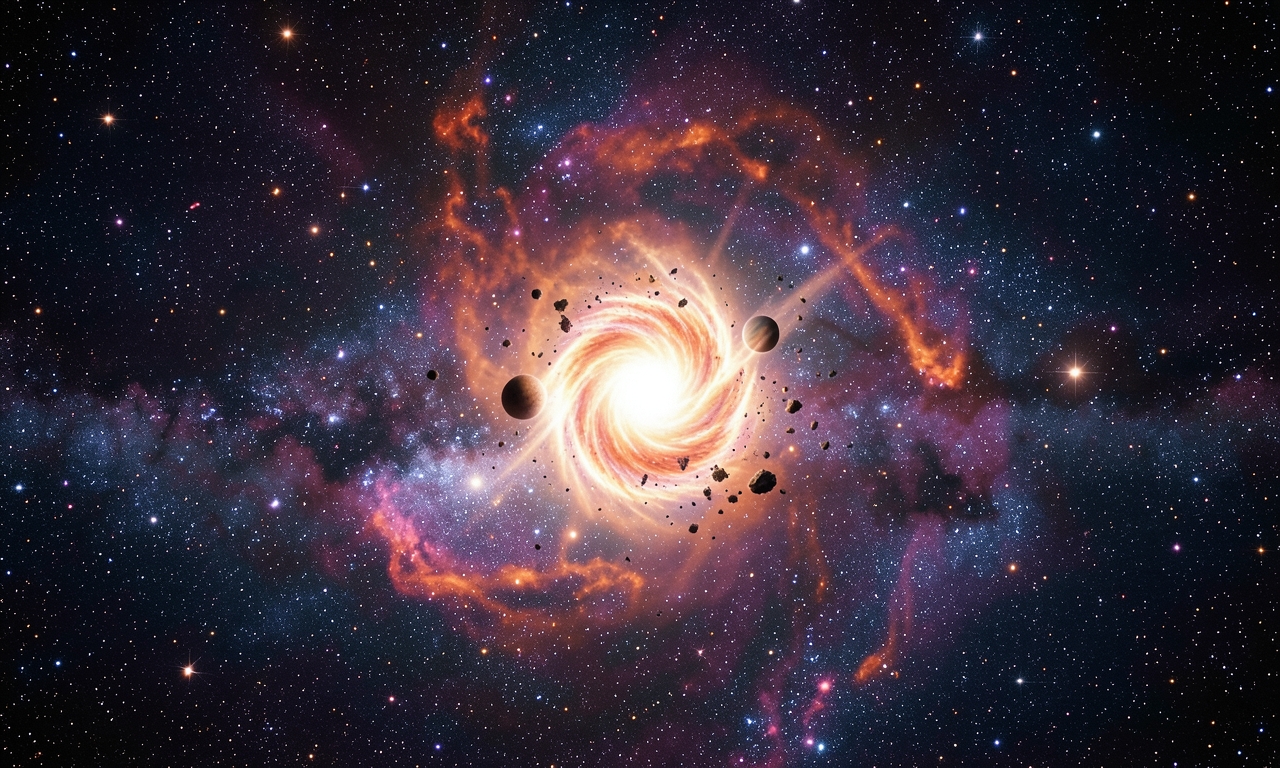
A Rare Cosmic Impact
A newly recorded merger of two neutron stars has supplied astronomers with valuable observations. These stellar remnants rank just behind black holes as the most compact objects known, featuring densities that challenge even high‑energy particle physics.
Detectable Ripples in Space‑Time
The collision generated powerful gravitational waves that were captured by the LIGO and Virgo detectors on Earth. These waves represent direct measurements of space‑time distortion, allowing scientists to probe the interior physics of neutron stars.
Implications for Long‑Standing Questions
Analysis of the waveforms has yielded clues about the composition of ultra‑dense matter, a topic that remains highly debated. The findings may help resolve the so‑called “equation of state” problem, which links pressure and density inside neutron stars.
Future Research Directions
The data will be combined with radio‑telescope observations and space‑mission results to deepen our understanding of heavy‑element formation and the dynamics of collisions under extreme gravity.