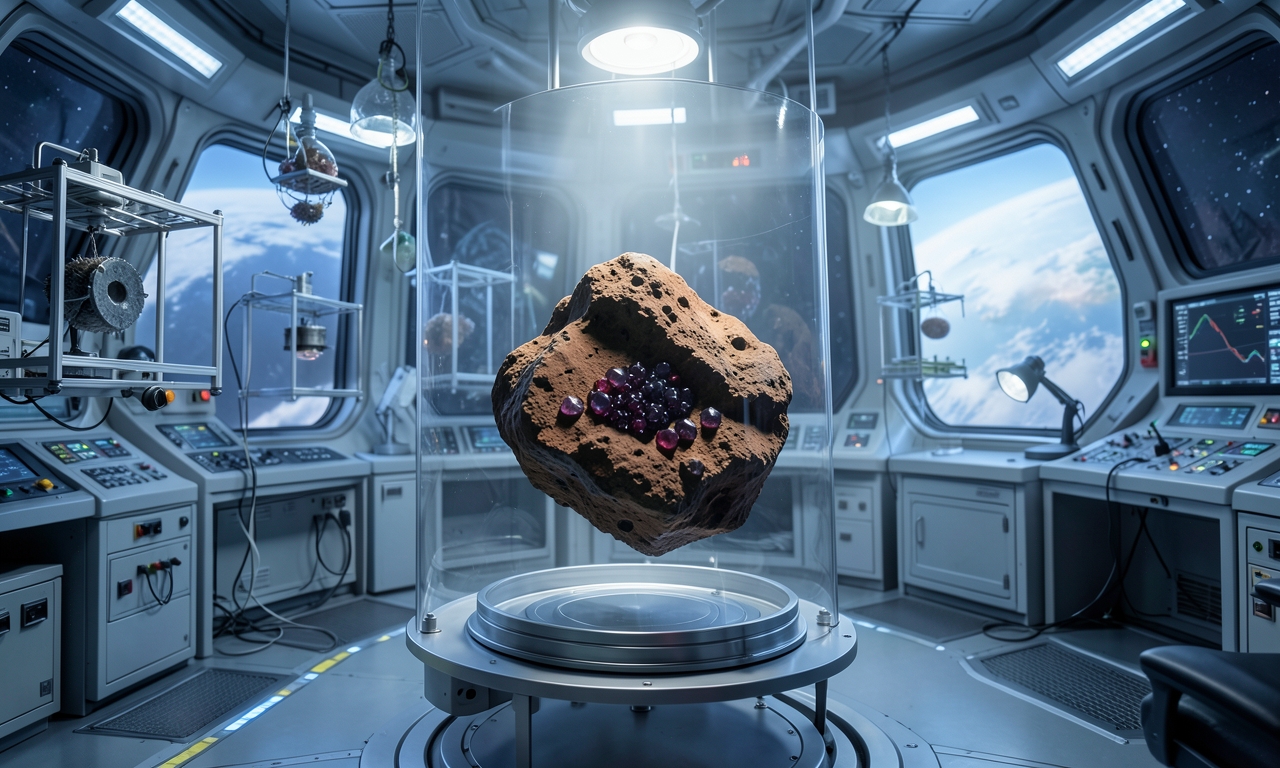
Discovery of an Unusual Rock
An international team of scientists has identified a rock type bearing garnet crystals within a small fragment of a Martian meteorite. The finding was made using high‑resolution scanning electron microscopy and X‑ray diffraction, which allowed precise determination of the crystal structure and chemical makeup.
Implications for Martian Geology
Garnet is a common mineral in metamorphic rocks on Earth, forming under high temperature and pressure. Its presence in the Martian sample suggests that comparable geological processes may have occurred on Mars, providing new insight into the planet’s tectonic and thermal history.
Historical Connection
On Earth, garnet has been celebrated since antiquity as the fiery red birthstone for January and was highly valued by ancient Egyptians for jewelry and ceremonial objects. The detection of this mineral on Mars links contemporary planetary science with a mineral that has held cultural significance for millennia.
Future Work
Planned analyses of additional Martian samples aim to assess how widespread garnet is across the planet’s crust and to compare its composition with terrestrial counterparts. These studies could illuminate the frequency of high‑pressure events on early Mars and their possible relationship to the presence of liquid water.