Introduction
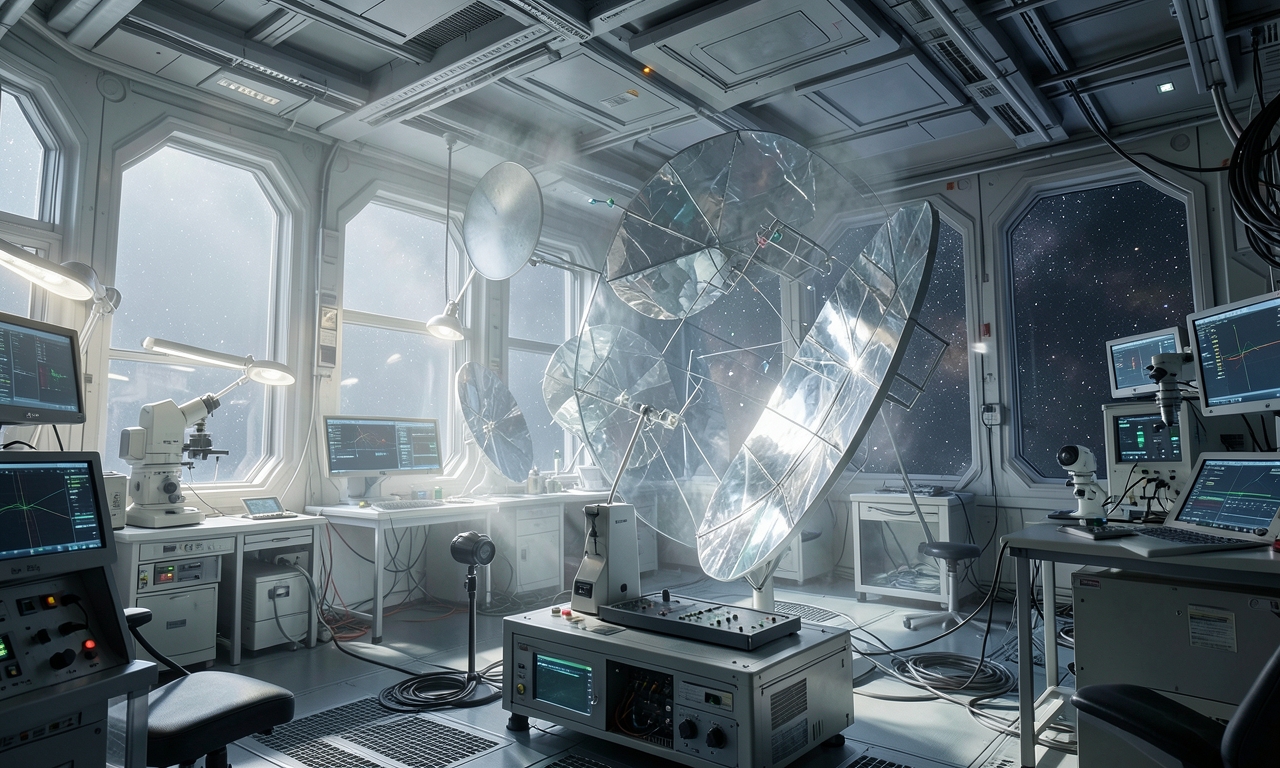
Massive mirrors placed in orbit have long featured in science‑fiction narratives, yet a rigorous assessment of their physical feasibility has been lacking. A newly released preprint addresses this gap.
Study and Authors
The paper, posted on arXiv, is authored by Shauna Sallmen of the University of Wisconsin–La Crosse and Eric Korpela of the University of California, Berkeley. Their work focuses on the orbital dynamics required for a mirror to remain stable without active propulsion.
Methodology
Using numerical simulations, the researchers explore a range of scenarios, varying mirror size, mass, and orbital parameters. They examine the influence of radiation pressure, gravitational perturbations from other bodies, and the need for corrective maneuvers.
Findings and Implications
The results indicate that a purely passive mirror can only maintain a fixed orientation under very specific conditions, demanding either substantial inertia or frequent adjustments. These insights are crucial for identifying artificial structures in space—potential technosignatures.
Future Work
The authors call for additional studies that incorporate material properties, manufacturing techniques, and observational strategies. Improved understanding could aid the search for extraterrestrial technology while informing future engineering concepts for large‑scale space structures.