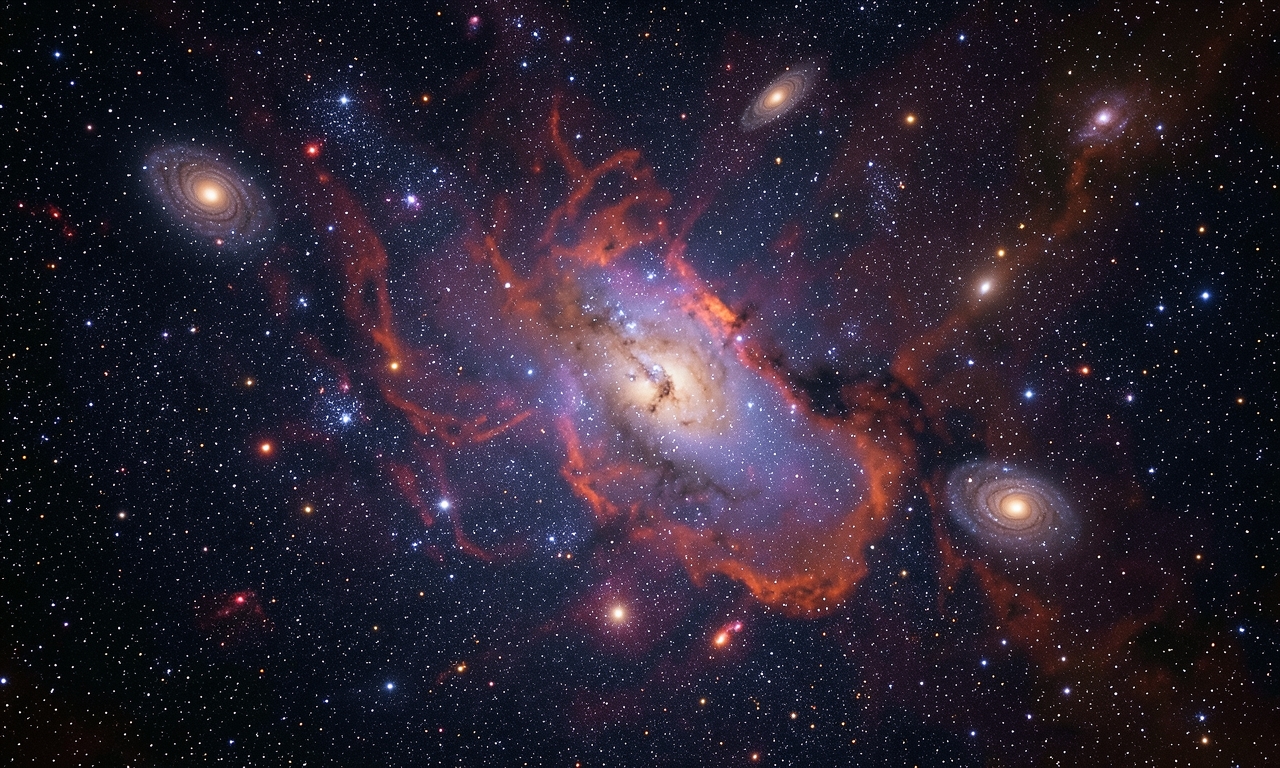
Rubin Observatory Begins Full LSST Survey
The Vera C. Rubin Observatory, funded by the U.S. National Science Foundation and Department of Energy, has officially commenced full operations for the Legacy Survey of Space and Time (LSST). This ambitious project will image the entire visible sky every few nights over a ten‑year period, creating an unprecedented dataset for studying dark energy, dark matter, solar system objects and transient phenomena.
Japanese scientists and engineers have played a significant role behind the scenes. Drawing on experience gained from building and operating the Subaru Telescope on Maunakea, they have contributed to the observatory’s software pipelines, data handling systems and operational procedures. More than eighty researchers from Japanese institutions are already accessing LSST data for scientific analysis.
The collaboration is expected to yield synergistic results. While Rubin’s wide‑field, rapid cadence survey will detect millions of moving and variable objects, the Subaru Telescope can provide deep, high‑resolution follow‑up observations of interesting targets identified by LSST. This combination will improve our understanding of topics ranging from the structure of the Milky Way to the nature of cosmic acceleration.
Officials note that the successful integration of Japanese expertise highlights the international character of modern large‑scale astronomy projects. As the survey progresses, the data will be made available to the global scientific community, enabling a broad range of investigations into fundamental questions about the universe.