Introduction
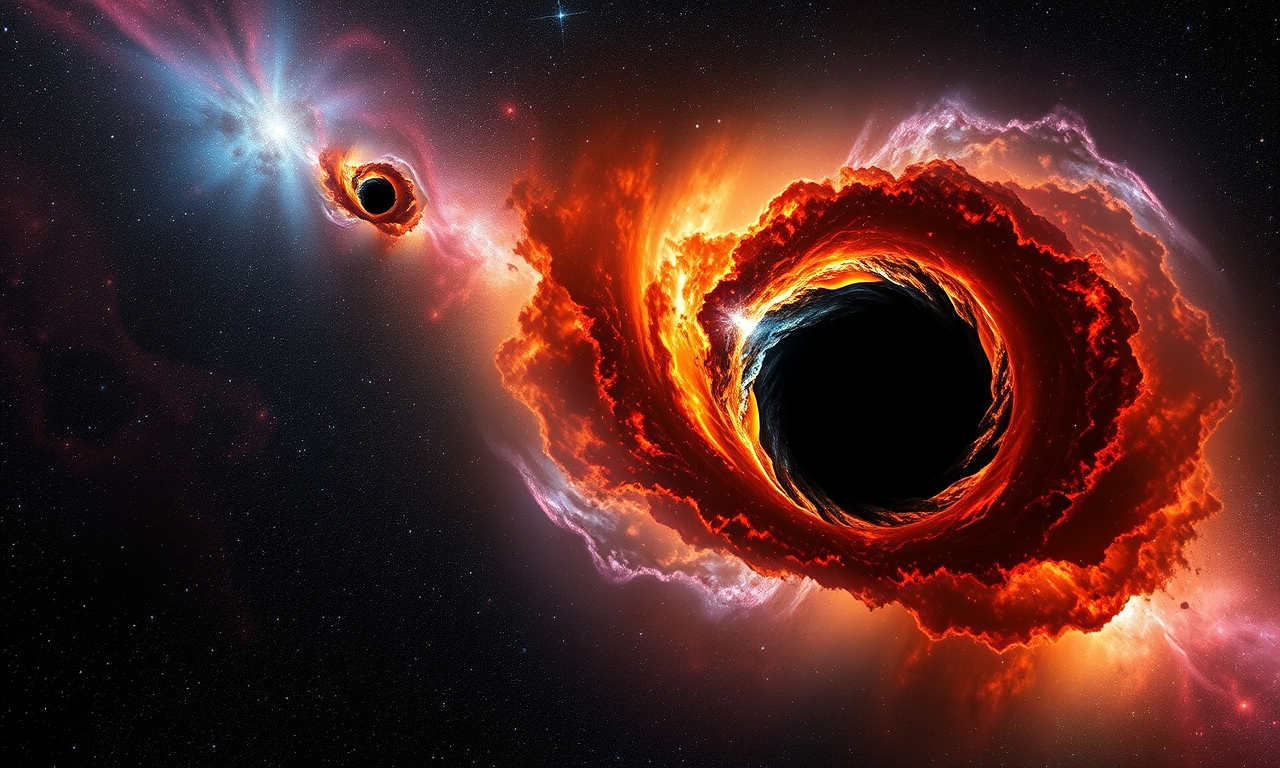
At the cores of virtually all massive galaxies reside extremely compact objects known as supermassive black holes. Their masses span from millions to billions of solar masses, exerting a profound influence on their surroundings.
James Webb Space Telescope findings
The James Webb Space Telescope (JWST) has captured light from the earliest epochs of the universe, revealing several black holes whose inferred masses appear to exceed the total mass of their host galaxies. These results challenge conventional growth models for such objects.
Unresolved questions about their origin
Researchers are probing how these central engines could accumulate so much mass within a few hundred million years after the Big Bang. Proposed mechanisms include highly efficient accretion, early mergers of smaller black holes, and rapid gas inflows, yet the exact pathways remain uncertain.
Implications for galaxy evolution
Supermassive black holes can regulate star formation through powerful radiation and outflows, shaping the mass and structure of their galaxies over cosmic time. Understanding their properties is therefore essential for a complete picture of galaxy growth.
Future observations
Continued JWST campaigns, complemented by upcoming facilities such as the Extremely Large Telescope, will refine mass estimates and environmental studies, helping to resolve the outstanding puzzles of early black‑hole formation.