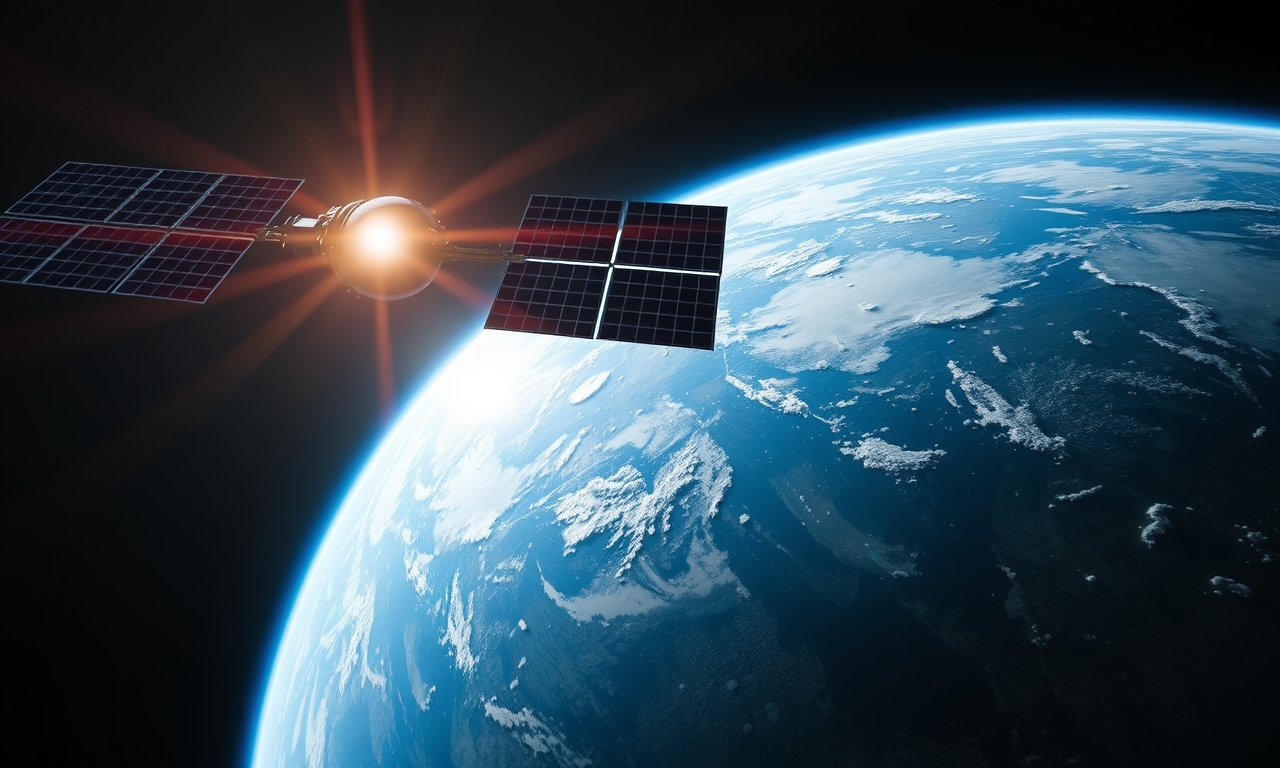
Orbital Mirror Project Receives Regulatory Go-Ahead
The US Federal Communications Commission (FCC) has approved a novel experiment involving a large reflective structure in low Earth orbit, designed to steer sunlight toward specific locations on the planet’s surface. Dubbed a method to generate “sunlight on demand,” the initiative aims to explore applications ranging from nighttime illumination to agricultural optimization.
The decision has triggered significant debate. Professional astronomers caution that reflected light could interfere with ground-based telescopic observations, especially during critical deep-sky surveys. Independent reviewers and members of the public have also raised concerns about potential unintended climate effects and safety risks, including localized heating or disruption of natural light cycles.
- The experiment involves redirecting solar radiation using an orbital reflector
- The FCC granted authorization despite objections from scientific communities
- Astronomers warn of possible interference with observational astronomy
Technical Scope and Potential Uses
The proposed satellite-borne mirror is expected to span several square meters and operate at an altitude between 400 and 600 kilometers. When properly oriented, it could produce bright, localized illumination spots on Earth’s surface. Proponents emphasize the experimental nature of the mission, stating its primary goal is to assess feasibility and environmental interaction under controlled conditions.
Supporters highlight possible benefits, such as supplementing daylight in polar regions during winter or enhancing photosynthesis in controlled-environment agriculture. Critics, however, argue that the project represents premature commercial intervention in Earth’s natural systems, lacking comprehensive regulatory oversight and ethical grounding.
- The mission will utilize a dedicated experimental satellite
- Orbital altitude is projected at 400–600 km
- Developers stress the exploratory and data-gathering purpose
Public Response and Future Steps
Public comments during the FCC’s review process included formal objections from scientific societies and environmental groups, all calling for more rigorous impact assessments. No launch date has yet been announced. While the FCC has granted frequency and communication licensing, additional approvals—potentially from environmental or space governance bodies—may still be required before deployment.