Probing Quenched Galaxies with JWST
A research group led by astronomers at the University of Nottingham examined a large sample of galaxies that ceased star formation roughly nine billion years in the past. Observations were carried out with the James Webb Space Telescope (JWST), whose infrared capabilities provide unprecedented detail of distant cosmic structures.
Sample selection and methodology
The team selected several hundred objects classified as "quenched" based on their spectral energy distributions, indicating an absence of ongoing star formation. By combining high‑resolution imaging with spectroscopy, they assessed the galaxies' morphologies, stellar populations, and residual gas content.
Key findings: merger remnants
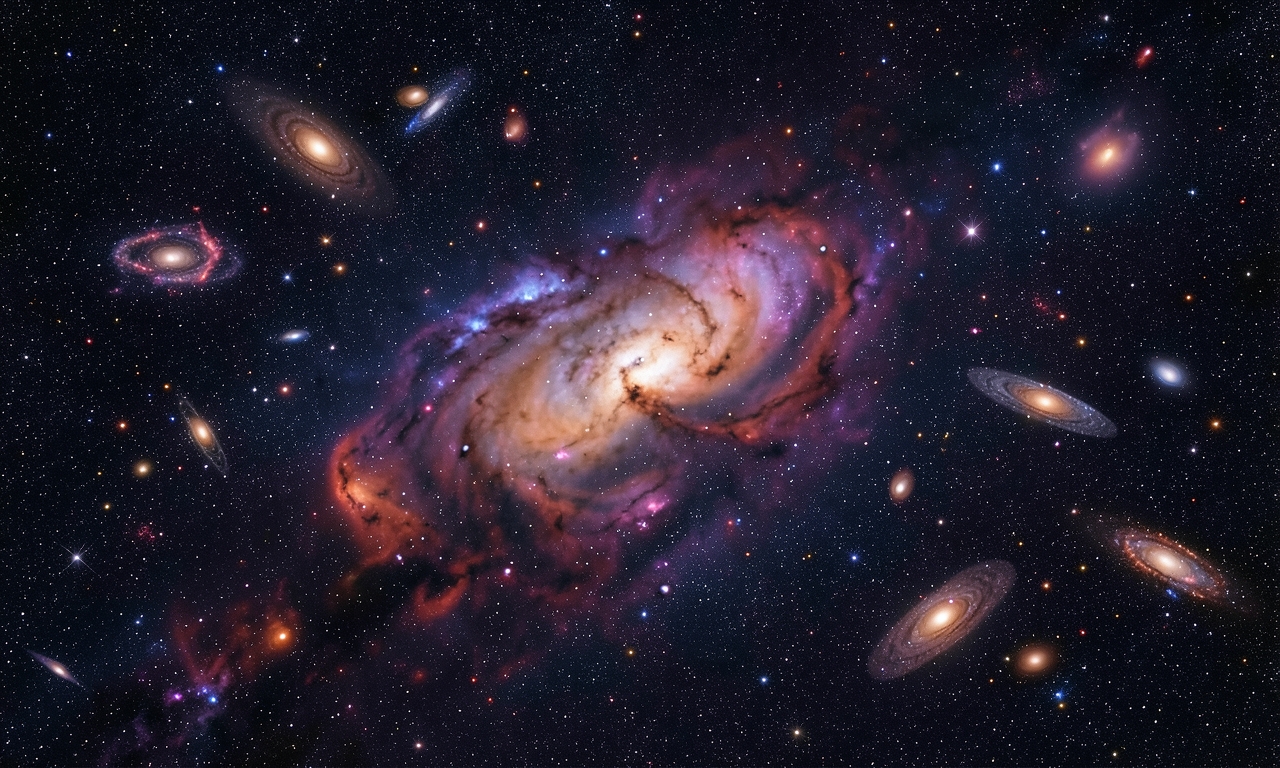
Analysis revealed that many of the studied galaxies exhibit clear signs of past mergers, such as disturbed shapes, central mass concentrations, and remnants of star clusters typically produced during galactic collisions. These observations support the idea that gravitational interactions can disrupt or expel the gas needed for new stars, leading to a rapid shutdown of star formation.
Implications for galaxy evolution
The results provide concrete evidence that mergers played a significant role in the early Universe's galaxy evolution, offering a plausible mechanism for the swift transition from active star‑forming systems to passive, quiescent ones.
Future directions
Continued JWST surveys, complemented by other observatories, aim to quantify how common such merger‑driven quenching events were and to explore the contribution of additional processes, such as active galactic nuclei, to the cessation of star formation.