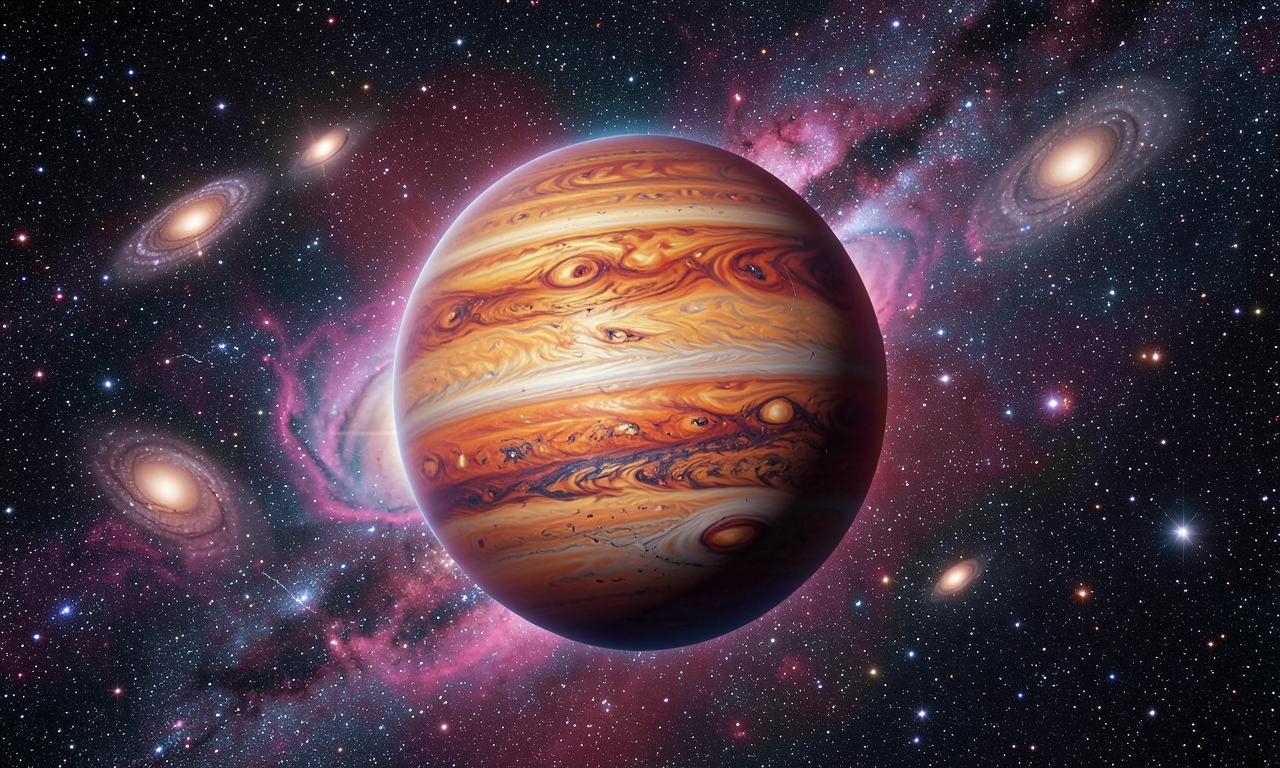
Extreme Temperatures on a Distant World
The exoplanet HD 209458 b, classified as a Hot Jupiter, completes an orbit around its Sun‑like star in under four Earth days. Its proximity subjects the planet’s atmosphere to intense stellar heating, reaching temperatures around 2,200 °C on the permanently illuminated side.
Observations and Atmospheric Modeling
Transit spectroscopy using space telescopes such as Hubble and Spitzer has revealed the planet’s atmospheric composition and thermal structure. Heavy elements like sodium and iron are present in gaseous form and are redistributed by supersonic winds from the day side to the night side.
Contrast with Terrestrial Conditions
The environment on HD 209458 b can be likened to a grill set to its highest setting. While a grillmaster on Earth may sweat at 40 °C, the upper atmosphere of this exoplanet reaches temperatures that would melt most metals. Nevertheless, the planet’s massive gravity keeps the gaseous envelope bound.
Future Prospects
Upcoming observations with the James Webb Space Telescope aim to probe the atmospheric chemistry in greater detail, searching for processes that occur only under such extreme heating. These studies will improve our understanding of planetary formation and survival in harsh stellar neighborhoods.