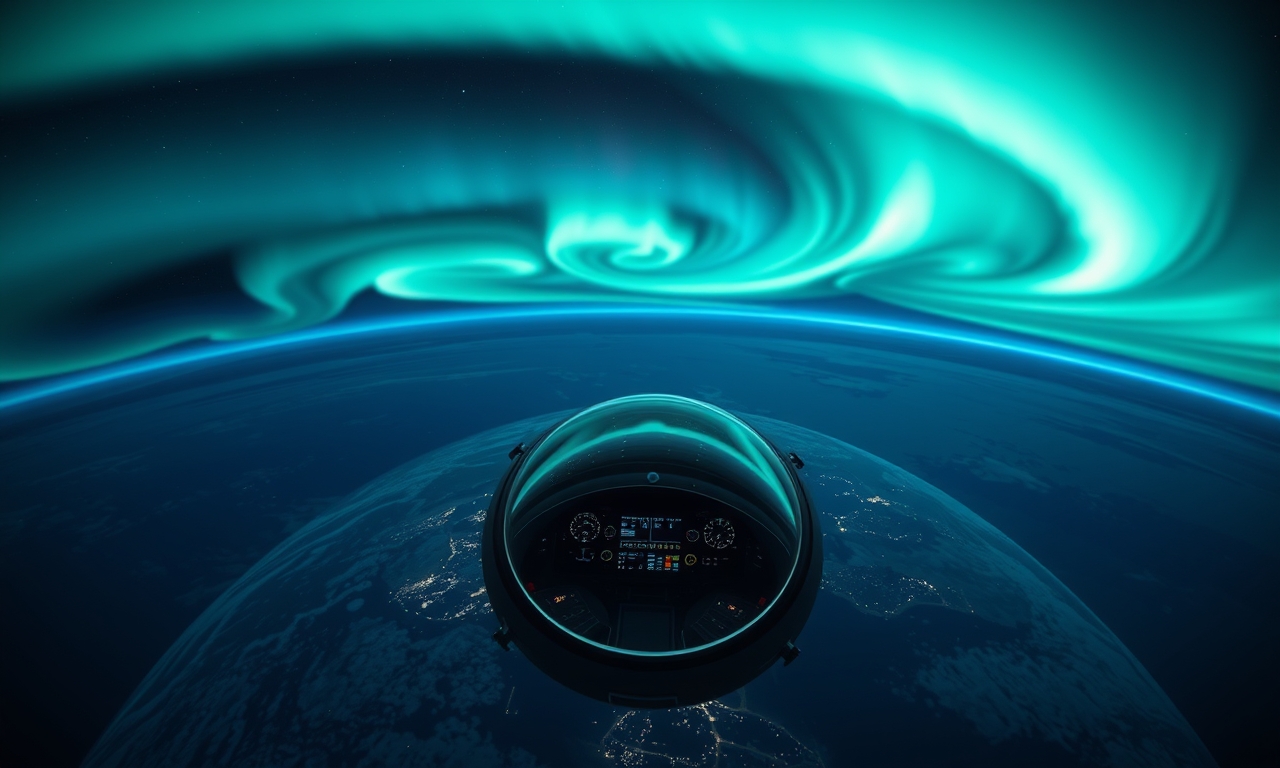
A Glimpse from Above
NASA astronaut Jessica Meir experienced a remarkable natural phenomenon when she recorded the serpentine auroras from the SpaceX Dragon’s viewport. The image was captured while she and her crewmates were sheltered inside the spacecraft, shielding themselves from the cold of space.
The Beauty of the Aurora Borealis
Known as the Aurora Borealis, these polar lights form when solar wind particles collide with Earth’s atmosphere. Meir’s photo showcases the characteristic, wave‑like lights glowing in soft greens that stretch across the sky.
Technical Details of the Capture
The SpaceX Dragon’s camera system allows crew members to take high‑resolution images of both the Earth and the cosmos. Equipped with a wide field of view and automatic exposure control, the system can capture clear shots even under fluctuating light conditions.
A Moment of Reflection
For the crew, watching the auroras was a brief but meaningful pause amid the demanding tasks aboard. Seeing Earth’s natural wonders from such a unique angle underscores the bond between humanity and the universe.