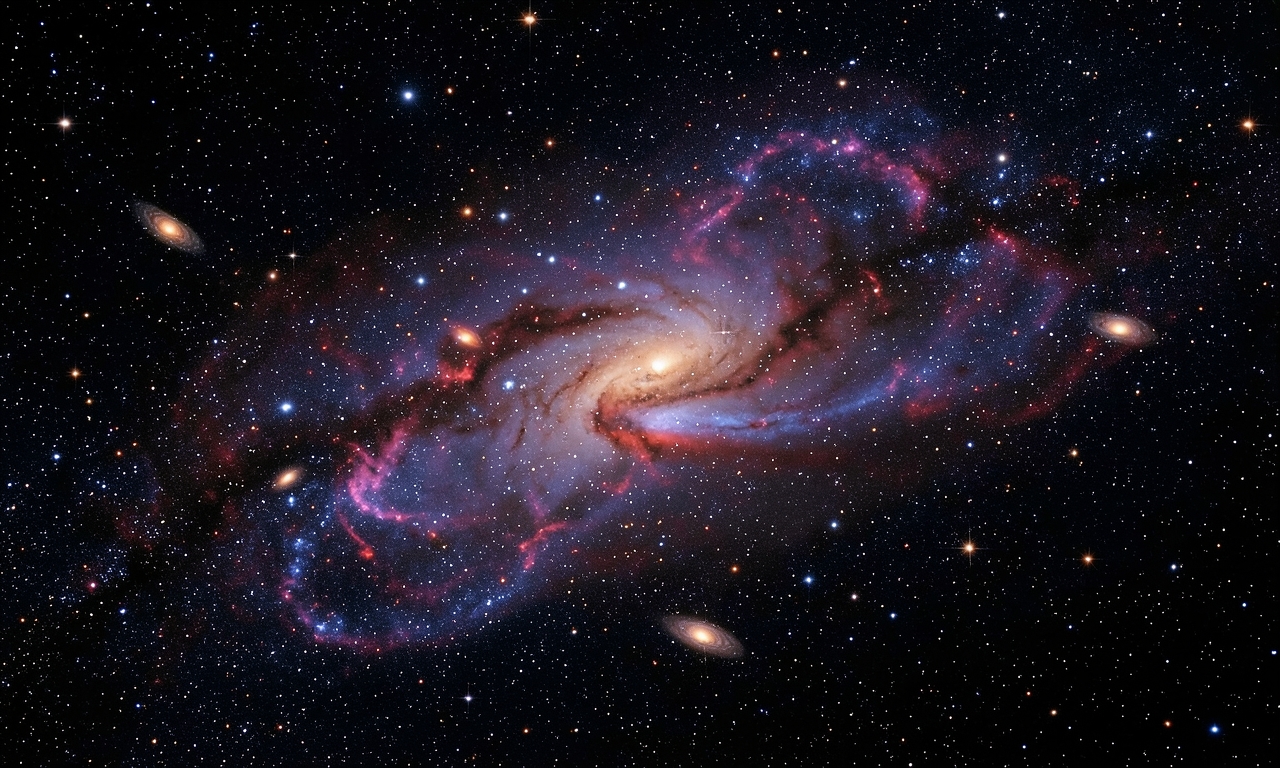
Discovery in the Galactic Center
NASA’s Chandra X‑ray telescope has revealed a complex cloud of hot gas and metal-rich fragments that trace back to a supernova event estimated to have occurred about 1,700 years ago near the Milky Way’s core. The X‑ray signatures match those expected from a young supernova remnant embedded in a dense stellar environment.
Velocity and Expansion
Analysis indicates that the expelled material traveled at speeds up to 2 million miles per hour (approximately 3.2 million kilometres per hour). Such velocities are characteristic of core‑collapse supernovae, where a massive star’s core implodes and its outer layers are violently ejected.
Astrophysical Implications
The findings provide new insight into how supernovae enrich the interstellar medium in the Galactic Center with heavy elements such as iron and nickel, which later contribute to the formation of new stars and planetary systems. The observation also sheds light on the dynamics of supernova remnants in a region dominated by strong gravitational forces and high gas densities.
Future Observations
NASA intends to complement Chandra’s data with observations from other facilities, including the James Webb Space Telescope, to map the remnant’s structure in greater detail and study its interaction with surrounding molecular clouds. Combining X‑ray and infrared measurements will help build a more complete picture of the physical processes at play.