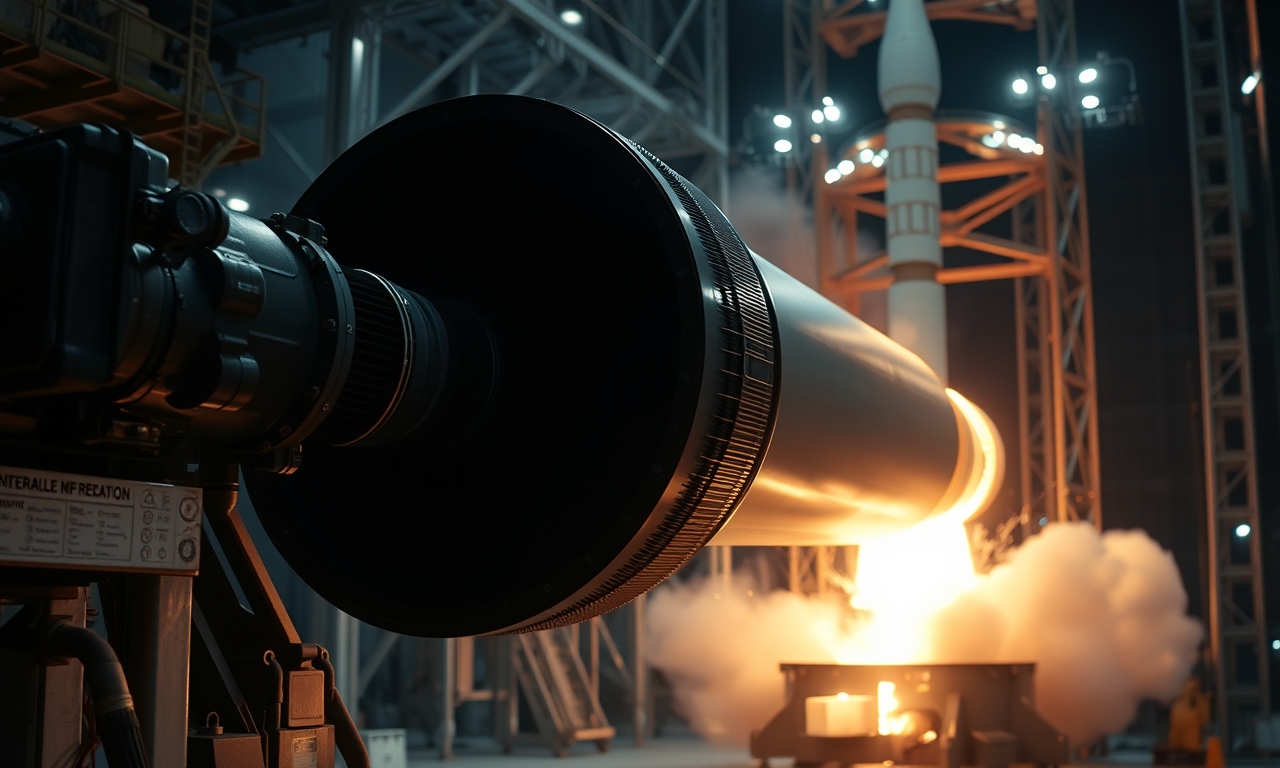
First Flight of the Long March‑10B
On Friday, July 10, the Chinese space agency carried out the inaugural flight of the Long March‑10B, a reusable launch vehicle designed to lower the cost of access to space. The launch took place from the Wenchang launch site on Hainan Island and aimed to demonstrate the recovery of the rocket’s first stage.
After reaching its planned sub‑orbital trajectory, the vehicle performed a stage separation. The first stage then executed a series of engine burns to re‑enter the atmosphere and steer toward a designated oceanic landing zone. The autonomous landing was successful, and the booster was recovered intact for potential reuse.
The test validated several critical technologies, including precision navigation and guidance, thermal protection during re‑entry, and autonomous landing capabilities. Analysts view the achievement as a significant step toward reducing launch costs and increasing the flexibility of China’s future space missions.
The Long March‑10B belongs to a new family of reusable launchers that China has been developing over the past few years. It is intended to serve both crewed and uncrewed missions to low Earth orbit and beyond.
International observers note that the successful maiden flight strengthens China’s position in the competitive arena of reusable launch technology. Subsequent test flights are expected to explore multiple reuse cycles and more complex mission profiles.