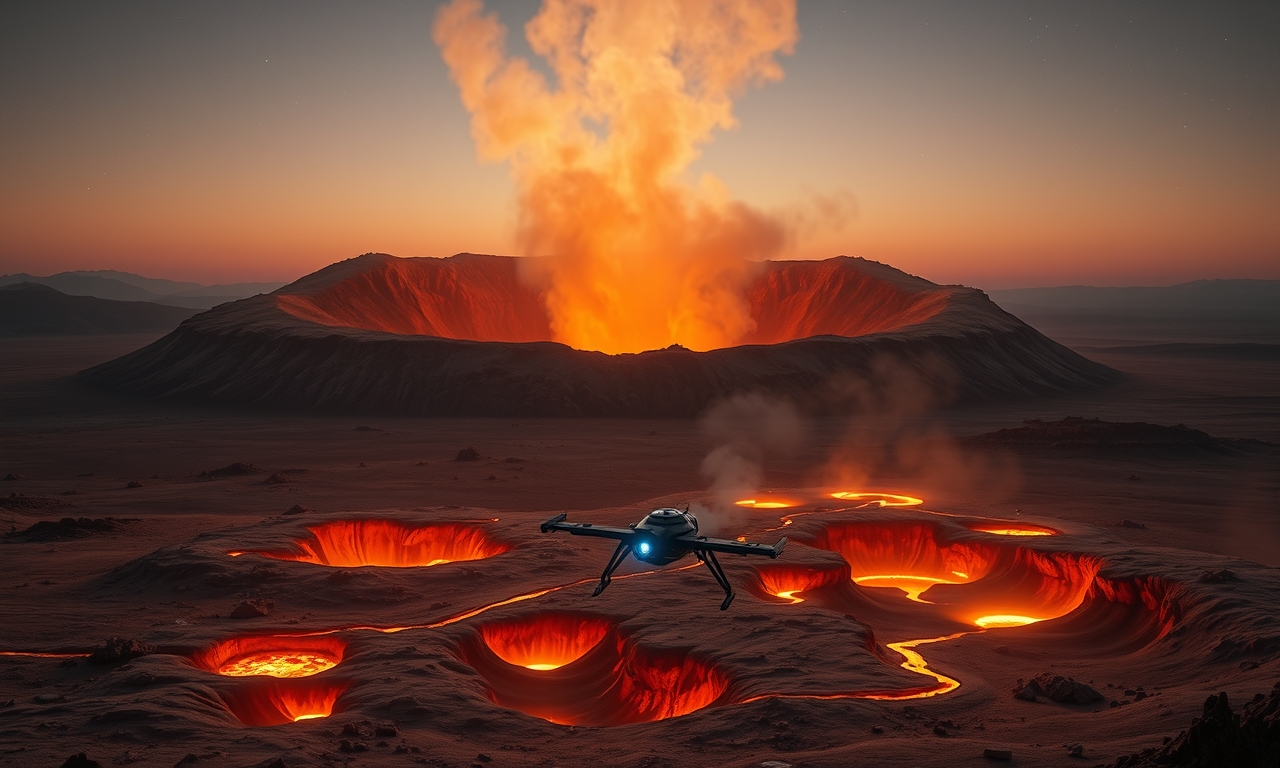
Early Impacts and Hydrothermal Systems
During the first two billion years of its history, Earth experienced frequent meteorite impacts. Researchers suggest these events not only formed craters but also heated deep sections of the mantle.
Formation of an Extensive Network
The released heat is thought to have driven widespread hydrothermal circulation. Fracturing of rock and infiltration of water created numerous hot springs distributed across large portions of the crust.
Potential for Life’s Origin
Hydrothermal environments are considered promising sites for chemical evolution because they provide energy‑rich conditions and abundant precursor molecules. The latest models quantify the scale of these systems, indicating they may have been large enough to support the first biochemical processes.
Research Methodology
The study integrates geological records, numerical simulations of impact events, and thermodynamic calculations. By combining these data, scientists reconstruct the frequency and spatial extent of hydrothermal zones in early Earth.
Implications for the Origin‑of‑Life Debate
If the models hold, the hydrothermal network could have played a pivotal role by offering many dispersed habitats, challenging the view that life originated solely in a single oceanic setting.