Geological Clues to Extreme Winds
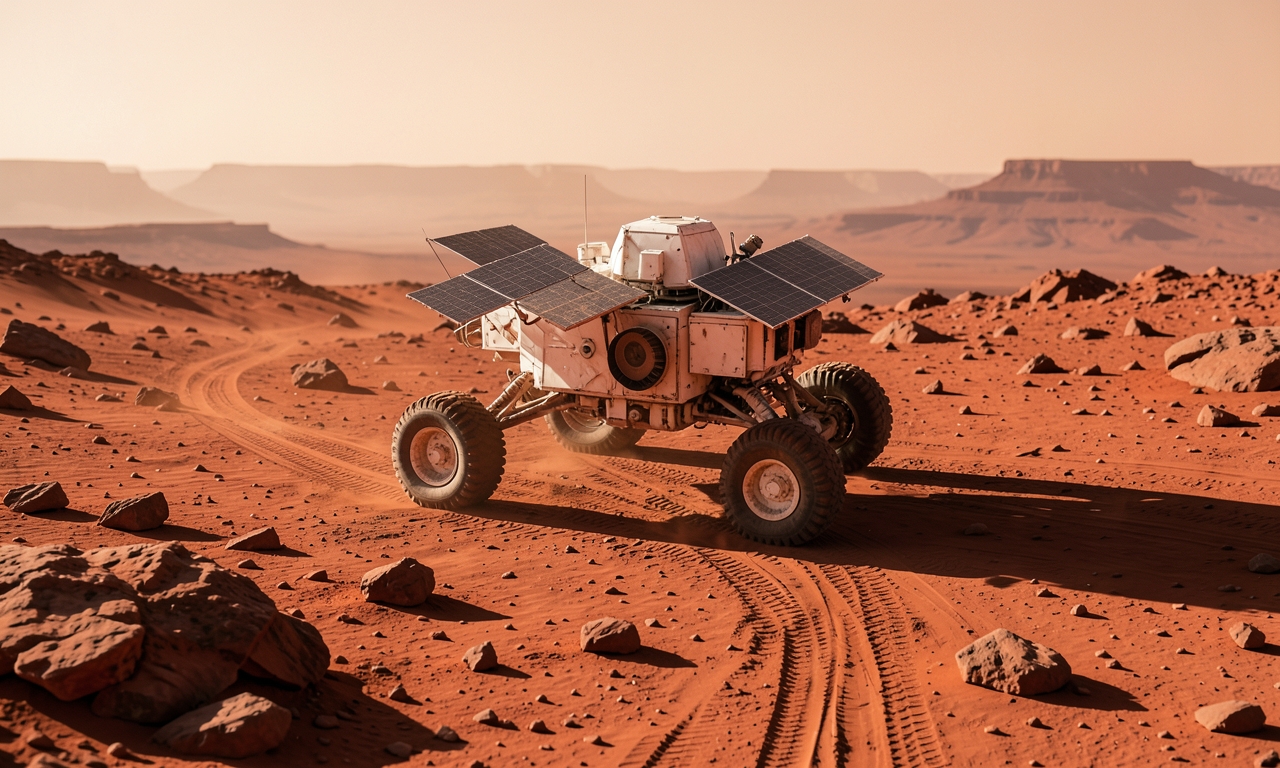
NASA's Curiosity rover has documented rock formations on Mars that point to an extreme weather event in the planet's deep past. The image was acquired on December 12, 2024, during the 4,391st Martian day of the mission, and shows multilayered rocks whose origin researchers attribute to intense wind-driven processes.
According to interpretations, a sandstorm swept across the surface of the Red Planet billions of years ago and lasted for several hours. The moving sand ripples were so energetic that they climbed over one another as they traveled. Over time, the deposited sediments consolidated into the hardened layered stones now visible.
Relevance for Mars Science
The observed structures provide additional evidence of the former dynamics of the Martian atmosphere. Such geological records assist scientists in reconstructing early climate conditions and surface activity. Documentation by the mobile laboratory contributes to a gradual understanding of how planetary surfaces evolved.
- Image date: December 12, 2024 (Sol 4,391)
- Event age: billions of years ago
- Storm duration: several hours
- Process: overlapping sand ripples under strong winds