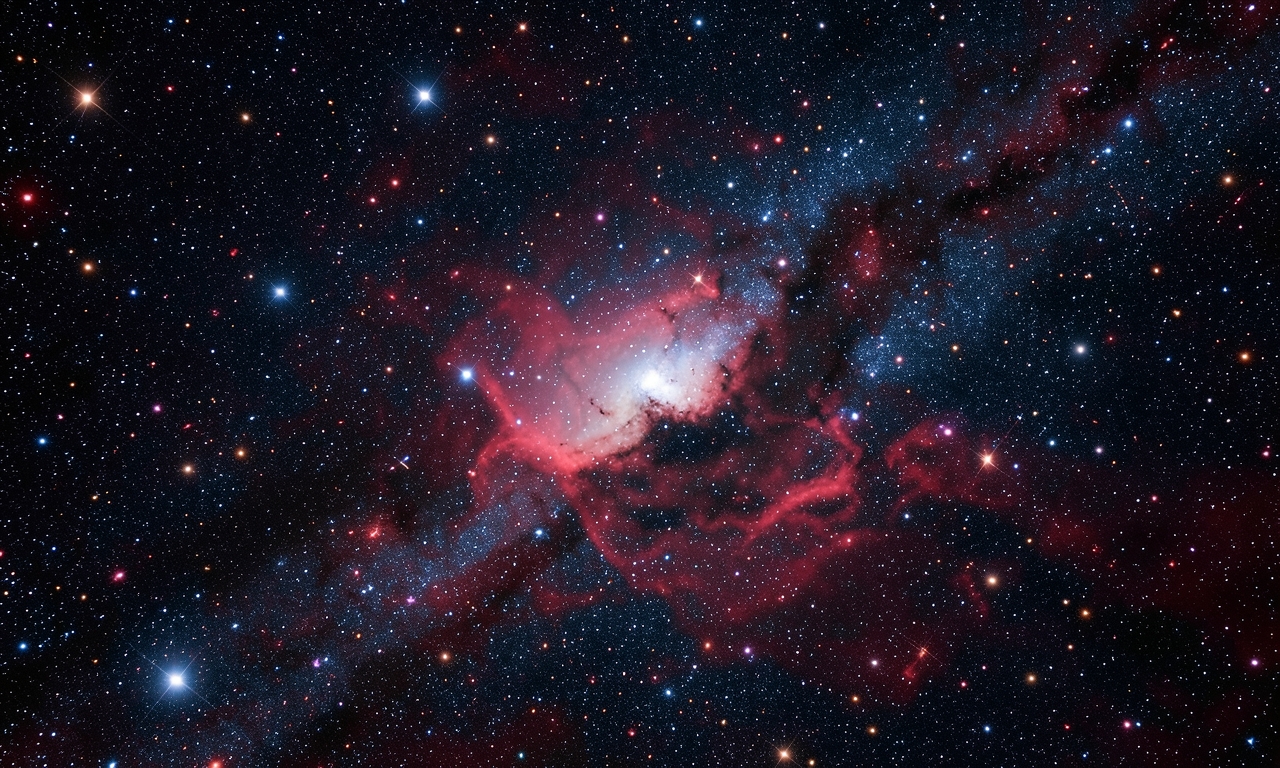
The formation of stars has been a fascinating topic for scientists for decades. In this process, so-called prestellar cores play a crucial role, which are considered to be cold and dense concentrations of gas and dust held together by gravity.
The Role of Prestellar Cores
Prestellar cores are the precursors to stars like our sun. They are the regions where the density of gas and dust is so high that they collapse under their own weight, thus initiating the process of star formation.
However, studying prestellar cores is a challenge, as they are very cool and dark, making them difficult to observe. Modern radio telescopes, however, have made it possible to detect these objects and study their properties.
New Insights from Radio Telescopes
Using radio telescopes, scientists have gained new insights into the internal mechanisms of stars in their early developmental stages. They have found that prestellar cores play a crucial role in regulating the star formation process.
Research in this area is still ongoing, and many questions remain unanswered. However, it is clear that studying prestellar cores and star formation is an essential step towards understanding the formation of stars like our sun.