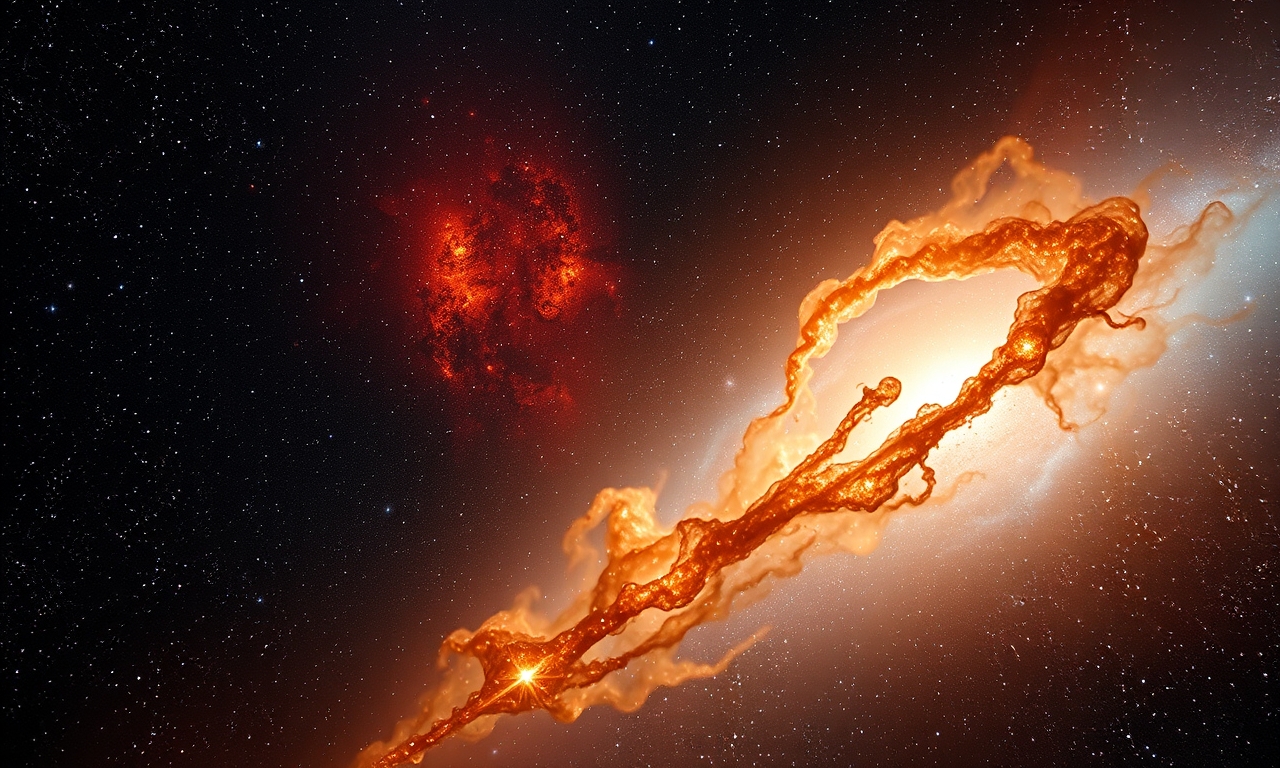
Peering into apparent emptiness
In 1995 the Hubble Space Telescope was pointed at a tiny, seemingly blank patch of sky. The resulting Hubble Deep Field revealed thousands of distant galaxies, fundamentally altering our view of the universe’s structure.
An image that inspired generations
For many middle‑school students at the time, the picture became a symbol of cosmic vastness and personal place within it, showing that even the darkest sky regions are teeming with activity.
Advances through subsequent observations
Since then Hubble has produced numerous deeper exposures, each benefiting from improved instrumentation. Last week the team released a new view of the galaxy cluster MACS0329‑0211, whose light is strongly magnified by gravitational lensing.
Targeted research with CLASH
Unlike the original blind survey, this latest image originates from the CLASH program (Cluster Lensing and Supernova survey with Hubble), which focuses on massive clusters to study their dynamics, dark matter distribution, and background galaxies.
Scientific significance
These observations provide essential data for cosmology, galaxy formation studies, and supernova research. They illustrate how gravitational lenses act as natural telescopes, granting access to the early universe that would otherwise remain hidden.