A pivotal event in galactic history
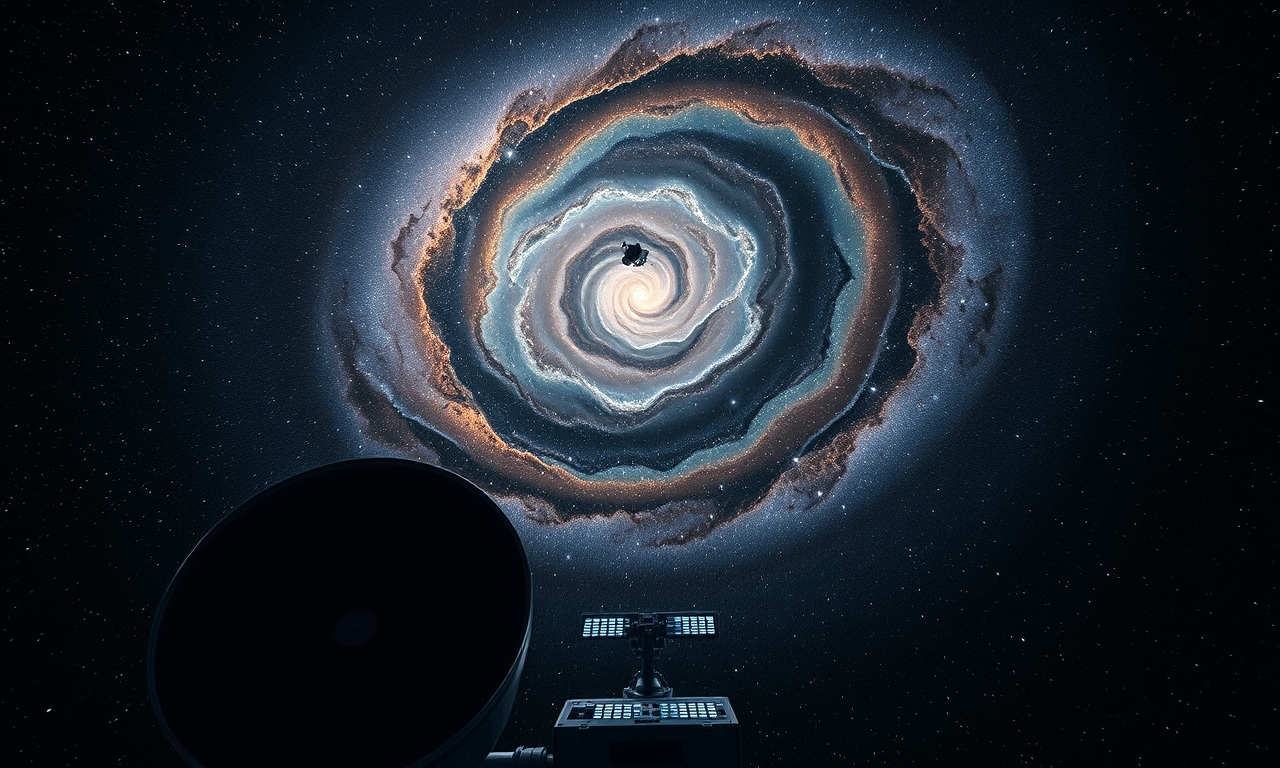
Recent astrophysical studies reveal that the Milky Way experienced a major merger roughly ten billion years ago. The encounter reshaped its spiral arms, boosted star formation, and redistributed dark matter throughout the galaxy.
Evidence in the stellar record
By examining stellar motions and chemical signatures, researchers have traced the remnants of that ancient impact. The intruding galaxy is estimated to have been about ten percent of the Milky Way’s mass, slightly perturbing its rotation.
A forthcoming collision
Simulations conducted by the European Space Agency and NASA forecast that in about four billion years the Milky Way will collide with the Andromeda galaxy. This future merger will further modify a structure already altered by the earlier event.
Potential consequences for the Solar System
Although interstellar distances are vast, gravitational interactions could shift stellar orbits, possibly affecting the Solar System’s trajectory. Scientists stress that a direct hit remains exceedingly unlikely.
Future observational prospects
The James Webb Space Telescope and upcoming missions aimed at mapping the galactic halo are providing increasingly detailed data. These observations will refine models of galactic collisions and improve predictions of the Milky Way’s long‑term evolution.