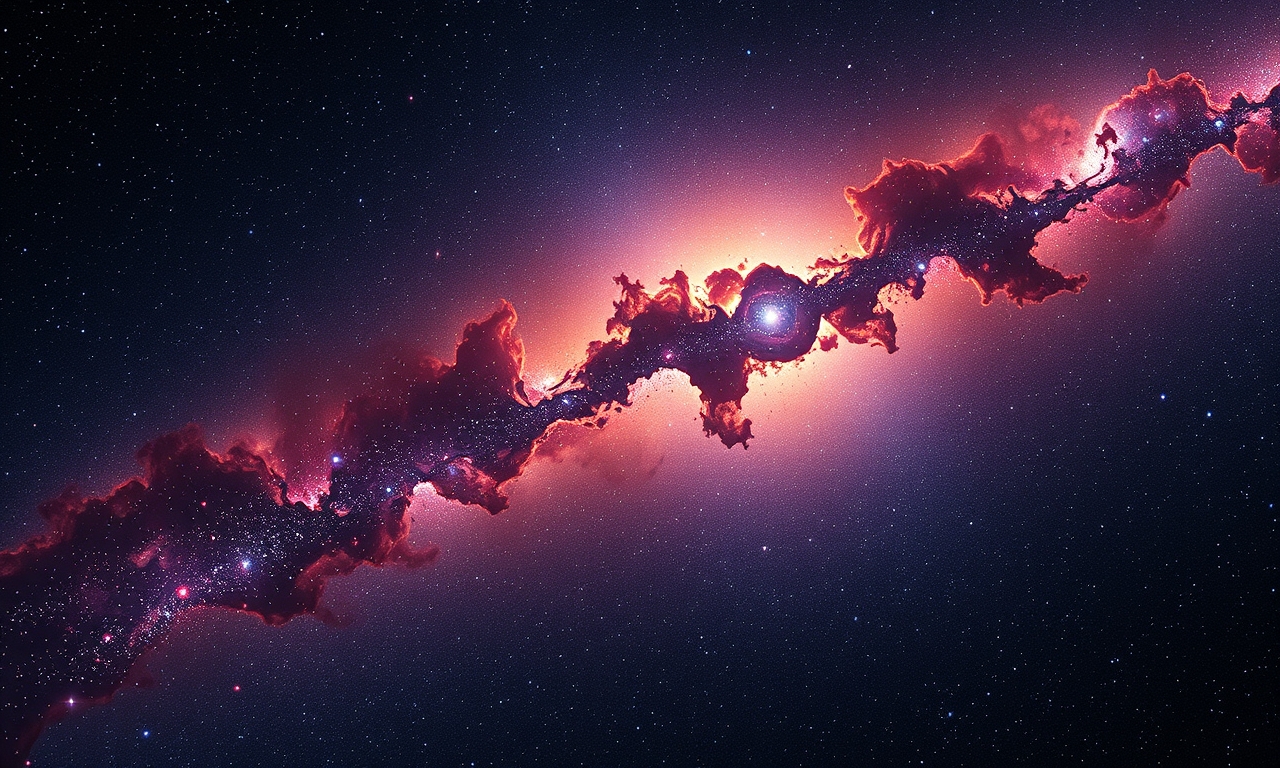
A fresh view of the Galactic centre
The European Space Agency’s Euclid spacecraft, originally designed to probe dark energy and dark matter, has recently pointed its instruments toward the densely packed stellar region at the heart of the Milky Way. The resulting images reveal an unprecedented level of detail, allowing astronomers to study the intricate distribution of stars and interstellar material in the galaxy’s core.
Technical approach
Equipped with a 1.2‑metre primary mirror and highly sensitive visible‑light and near‑infrared cameras, Euclid can penetrate the dust‑obscured zones that normally veil the Galactic centre. By combining data from multiple wavelengths, the telescope delivers clear views of star clusters, gas clouds and potential star‑forming sites.
Scientific relevance
The observations support models of stellar formation and the dynamics of the Milky Way’s bulge. In particular, the distribution of older stellar populations and their interaction with the supermassive black hole Sagittarius A* can now be examined with greater precision. Early analysis suggests the central stellar density is higher than previously estimated.
Future prospects
Euclid will continue to monitor the Milky Way’s core as part of its long‑term survey programme. The data will be cross‑referenced with observations from other facilities, such as the James Webb Space Telescope, to build a more comprehensive picture of our galaxy’s structure and evolution.