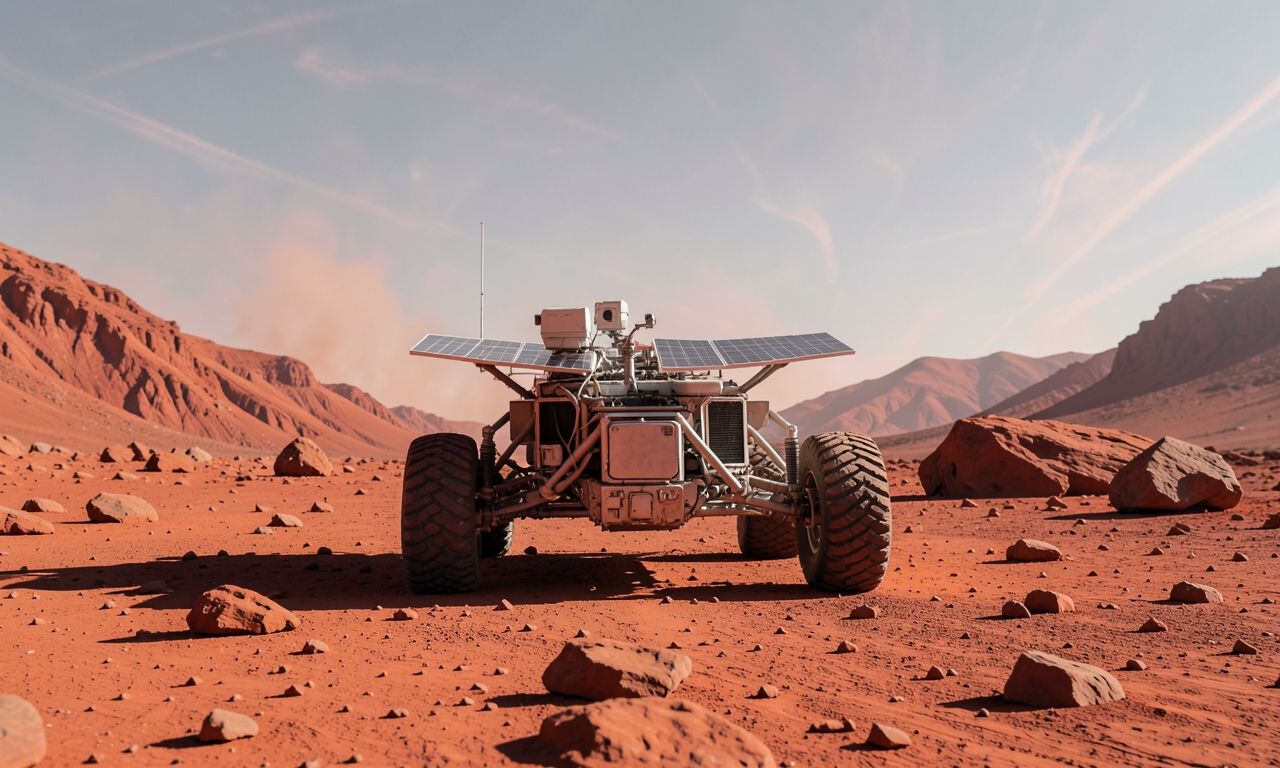
Mission to Explore Martian Soil
The European Space Agency (ESA) is employing a targeted geological strategy with the Rosalind Franklin rover to investigate whether life once existed on the Red Planet. The mission focuses specifically on the analysis of clay deposits, which are viewed as potential archives for organic compounds.
The Significance of Clay Minerals
Researchers believe that clay minerals possess the ability to preserve biological traces over billions of years. Because these minerals form in the presence of water, they provide ideal locations for searching for fossilized remains or chemical signatures of ancient microorganisms.
Technological Approach
The rover will be equipped with specialized instruments designed to access deeper soil layers. By penetrating the surface, the mission can retrieve samples that have been shielded from the harsh radiation of the Martian surface, increasing the likelihood of discovering intact organic molecules.
- Focus on water-altered geology
- Search for biological signatures
- Utilization of advanced drilling systems