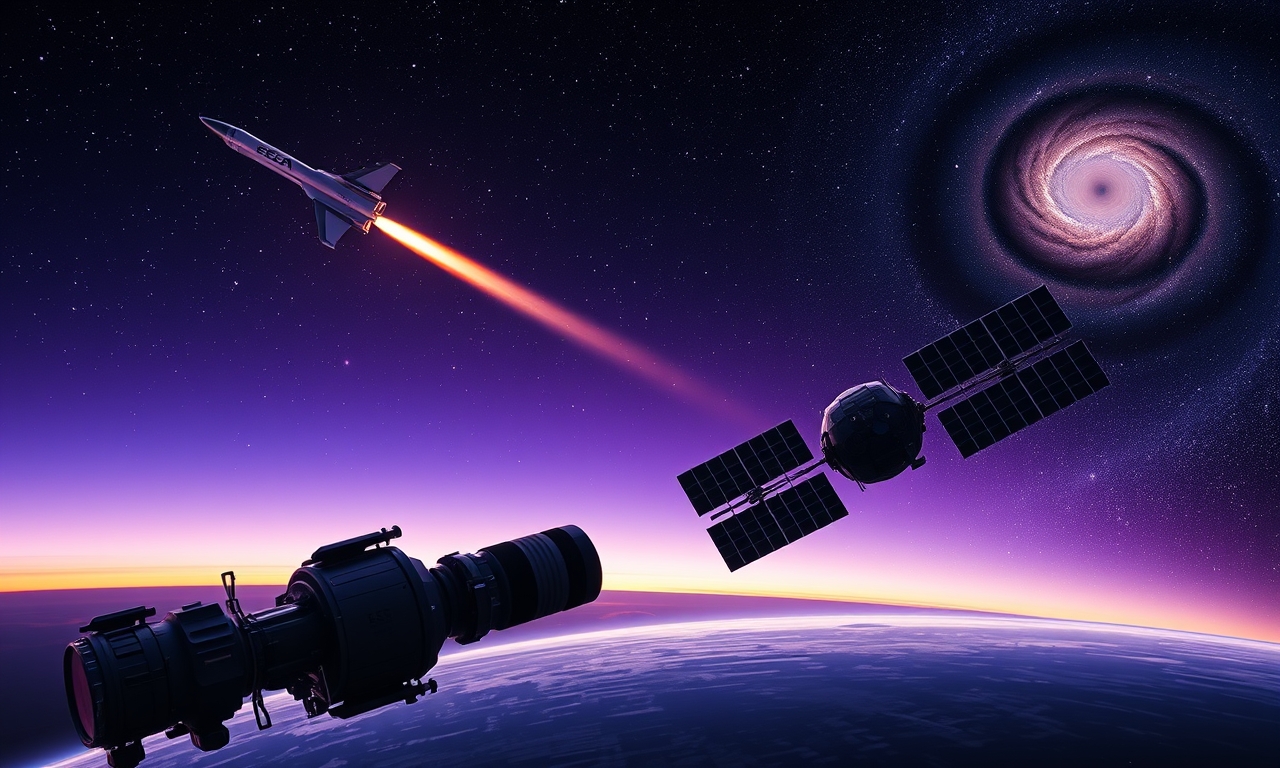
A New Frontier in Galactic Research
The European Space Agency (ESA) has formally committed to a mission focused on exploring the elusive, outer halos of galaxies. These halos, composed of diffuse gas and stars, lie beyond the bright stellar disk and hold vital clues to the formation history of galaxies.
While traditional optical images capture only the luminous core of a galaxy, advanced detectors now allow astronomers to analyze the weak radiation emitted by these halos. By measuring elemental abundances, temperature gradients, and kinematics, scientists can infer past star‑formation events and accretion processes.
The primary objective of the mission is to answer how galaxies such as our Milky Way came into being. High‑resolution imaging and spectroscopy of numerous galaxies will map the composition and dynamics of their halos, potentially reshaping our understanding of cosmic structure and stellar system evolution.
ESA highlights that the project will be a pivotal step in studying dark matter and intergalactic material. The resulting data will be of interest not only to astronomers but also to physicists and cosmologists.
The planned instruments are designed to detect halo emission with unprecedented sensitivity, enabling measurements that were previously unattainable. The mission is slated to launch in the coming years and will involve a broad network of international collaborators.