A new glimpse into the early cosmos
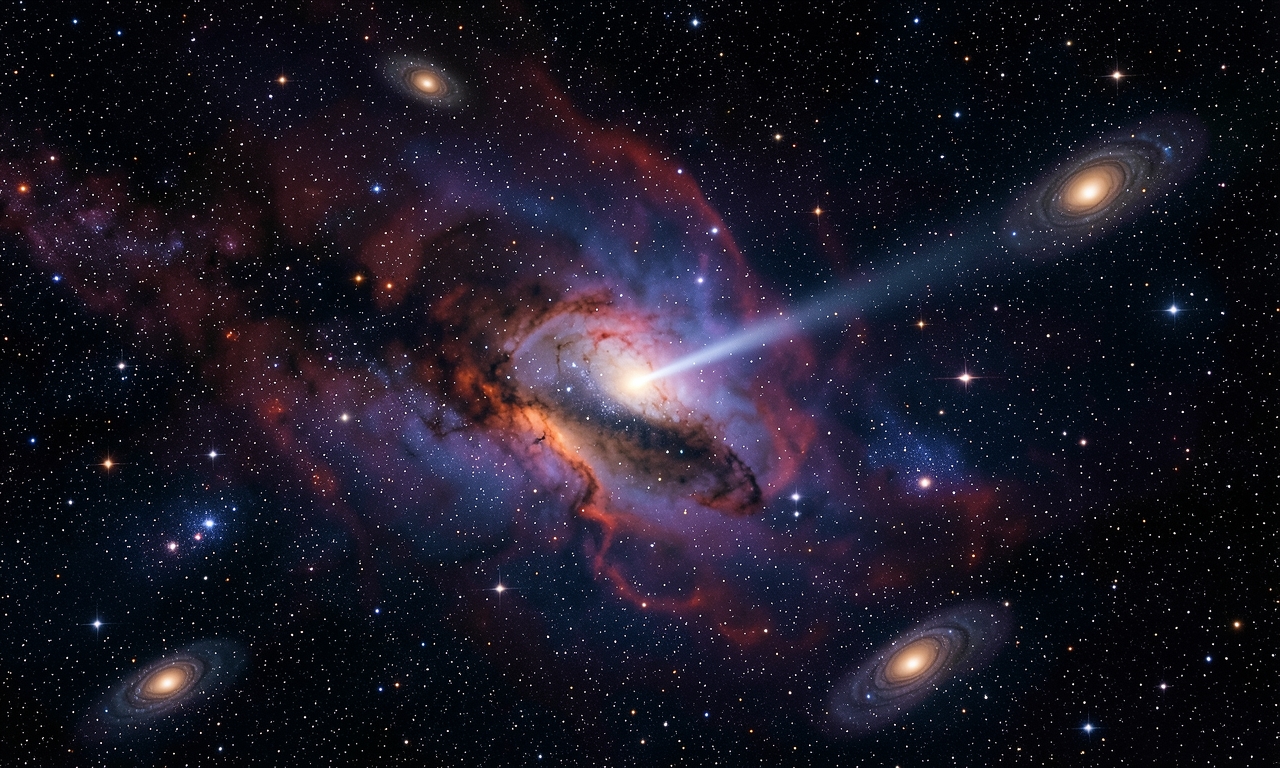
European Space Agency’s Euclid space telescope has uncovered a collection of 31 quasars that rank among the oldest known objects in the universe. These intensely luminous galactic nuclei, powered by supermassive black holes, provide a window into the formative stages of the early universe.
The two earliest quasars
Among the discoveries, two quasars stand out as the earliest ever observed. Their brightness rivals the output of roughly one trillion suns and originates from a time when the universe was only 670 million years old – about 5 % of its current age.
Implications for cosmology
The findings offer crucial data on black‑hole growth and galaxy formation during the first few billion years after the Big Bang, supporting models that predict rapid mass accumulation in early cosmic epochs.
Euclid’s role in the research
Although Euclid was primarily designed to study dark energy and dark matter, the ESA‑operated observatory has demonstrated its capability to probe extremely distant, bright objects, expanding its scientific reach.
Future prospects
Continued analysis and follow‑up observations aim to determine how common such early quasars were and what role they played in the assembly of the first galaxies.