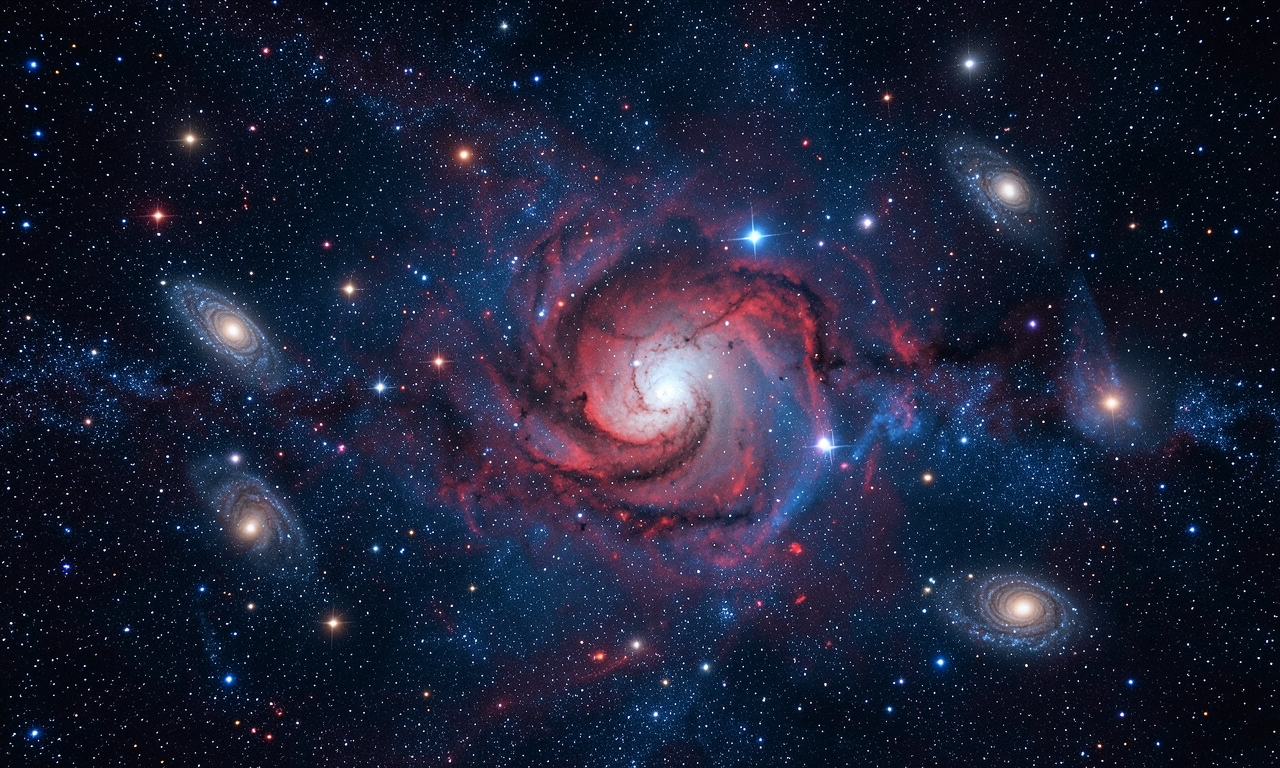
A fresh view of the Milky Way’s heart
The European Space Agency’s Euclid mission has delivered an unprecedented image of the central region of our galaxy. The picture contains more than 60 million stars and records roughly 50 known exoplanetary systems, making it the most extensive visual representation of this area to date.
How the image was obtained
Although Euclid was primarily designed to map dark matter and dark energy, its high‑resolution infrared and visible‑light instruments were employed for this observation. By combining long exposure times with precise image stabilization, the spacecraft captured details that surpass previous surveys.
Implications for astronomy
The new image provides researchers with rich information on stellar distribution, the structure of the galactic bulge, and the characteristics of star clusters near the centre. The identified exoplanet systems also allow comparative studies between planetary architectures in the inner and outer Milky Way.
Future analysis
International teams will analyse the dataset over the coming months to address questions about star‑formation history and the dynamics of the galactic core. ESA intends to publish the findings in scientific journals and showcase the results in public exhibitions.