A Bonus Observation from a Major Mission
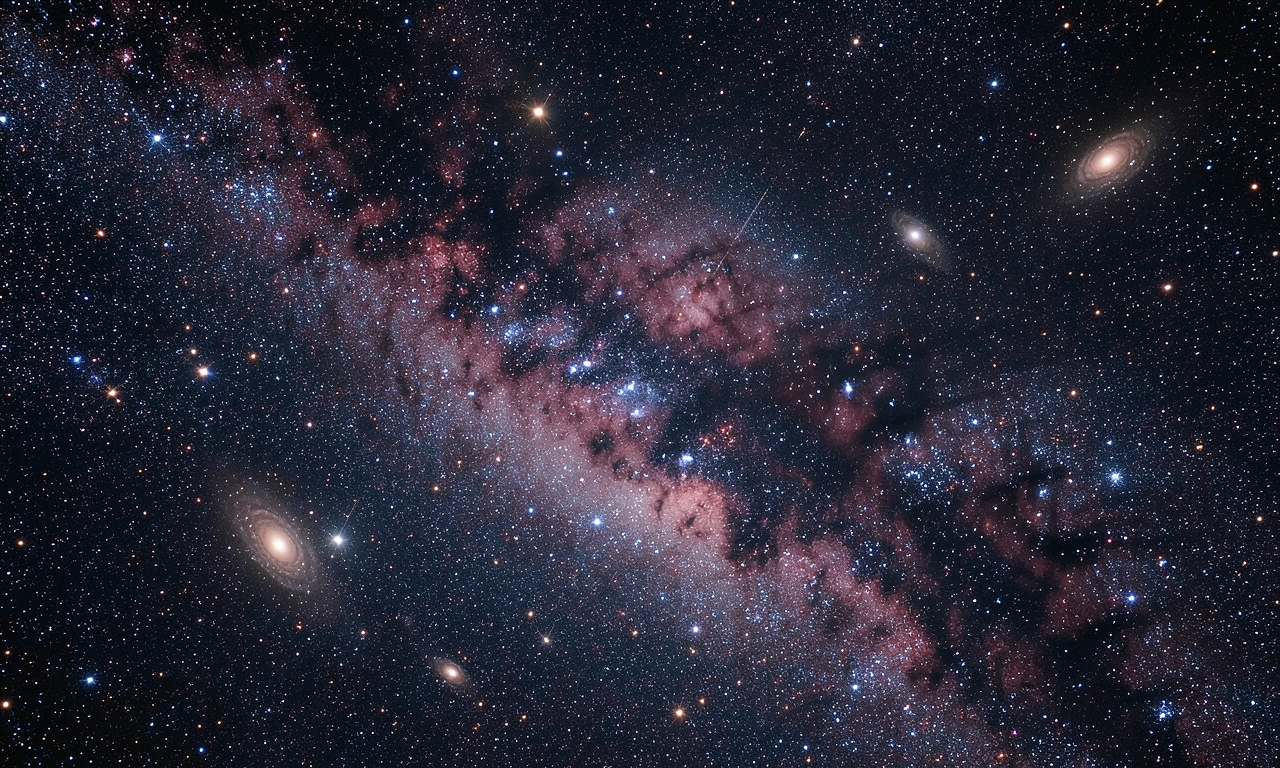
The European Space Agency’s Euclid observatory has delivered a detailed view of the dense stellar bulge at the heart of our galaxy. The exposure required roughly 26 hours of integration and falls outside Euclid’s primary science goals, which focus on probing dark energy and dark matter.
Technical Overview
Utilising its precise infrared and optical instruments, Euclid mapped the crowded central region with exceptional clarity. The long exposure demonstrates the telescope’s capability to produce high‑quality data even when operating beyond its core objectives.
Link to the Roman Space Telescope
The resulting image will be employed as a reference field for NASA’s upcoming Nancy Roman Space Telescope. In that mission, the portrait will serve as a background for gravitational microlensing surveys aimed at detecting exoplanets.
Scientific Relevance
While not part of Euclid’s main programme, the data provide valuable insight into the stellar distribution and density of the Milky Way’s bulge, helping to refine models of galactic formation and evolution.
Future Prospects
Combining Euclid’s observations with those from the Roman telescope is expected to enhance the detection of distant planets and deepen our understanding of the structure of our own galaxy.