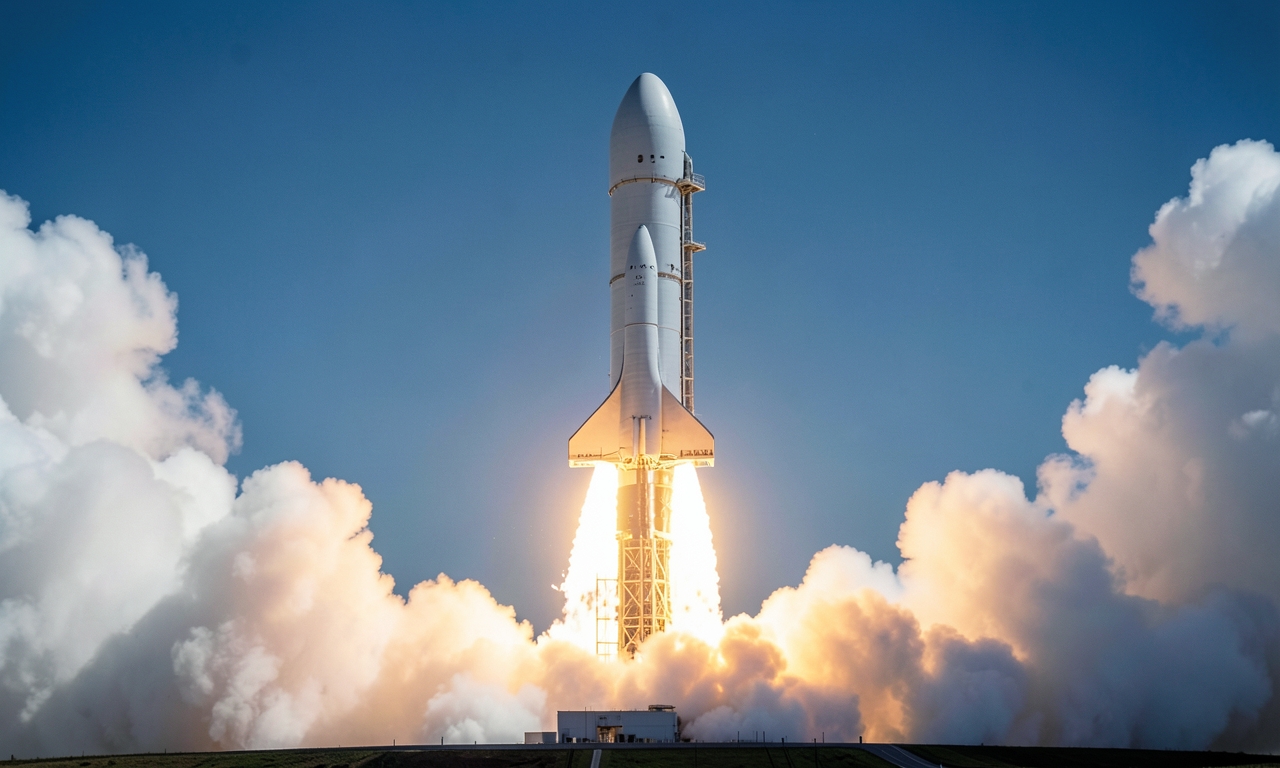
First Flight of Ariane 6
The maiden voyage of Europe’s next‑generation launch vehicle, Ariane 6, took place on 9 July 2024 from the Guiana Space Centre in Kourou, French Guiana. The rocket lifted off vertically, marking the first operational flight after years of development and testing.
Mission Details
Ariane 6 lifted off at 09:00 local time, powered by its Vulcain 2.1 engine on the core stage and two P120C solid‑rocket boosters. After approximately eight minutes of powered flight, the upper stage placed a mass‑simulator payload into a low Earth orbit at an altitude of roughly 200 kilometres. The flight lasted about 26 minutes before the upper stage performed a controlled deorbit maneuver.
Significance for Europe
The successful debut demonstrates that Ariane 6 can meet the performance targets set by the European Space Agency and Arianespace, positioning it to replace the aging Ariane 5 as Europe’s workhorse for satellite launches. Industry officials noted that the vehicle’s modular design allows configurations with two or four boosters, offering flexibility for a range of mission profiles.
Outlook
With the first flight complete, Ariane 6 is slated to begin commercial operations later in 2024. Upcoming launches will carry telecommunications, Earth‑observation and scientific satellites, reinforcing Europe’s independent access to space. Continued testing will focus on reusability concepts and further cost reductions.