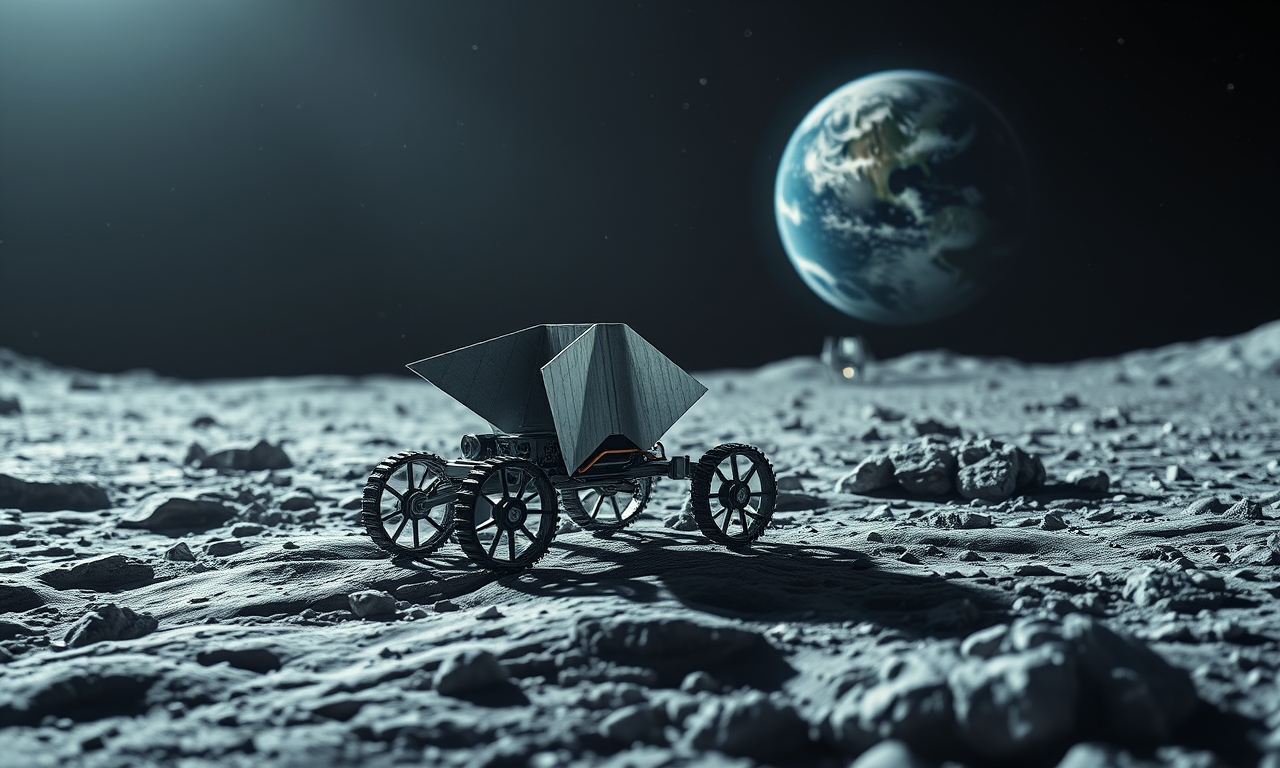
A novel concept for lunar missions
Where previous Moon projects have ranged from vehicle‑sized rovers to massive payloads, a compact rover with a variable shape offers a different approach. The device is roughly the size of a human palm and can alter its configuration to suit diverse terrain conditions.
Design and operation
The architecture draws inspiration from the flexible mechanisms of Japanese toy robots. A modular chassis allows the rover to extend wheels, retract, or reshape itself to navigate obstacles. Integrated sensors and a custom navigation software enable fully autonomous movement without continuous ground‑station guidance.
First lunar deployment
As part of an international partnership, the rover touched down on the Moon last month. During the trial it covered several kilometres, climbed crater walls and adjusted its shape in real time to cope with uneven ground. Telemetry sent back to mission control confirmed stable and reliable performance.
Implications for future exploration
The self‑adapting capability opens the door to low‑cost investigations of confined areas. Such mini‑rovers could complement larger platforms by reaching hard‑to‑access sites or acting as scouts for upcoming crewed missions.
Future outlook
Developers aim to refine the technology further and add scientific payloads. The ultimate goal is to produce a fleet of lightweight, autonomous robots that can operate in swarms to survey the Moon and, eventually, other planetary bodies.