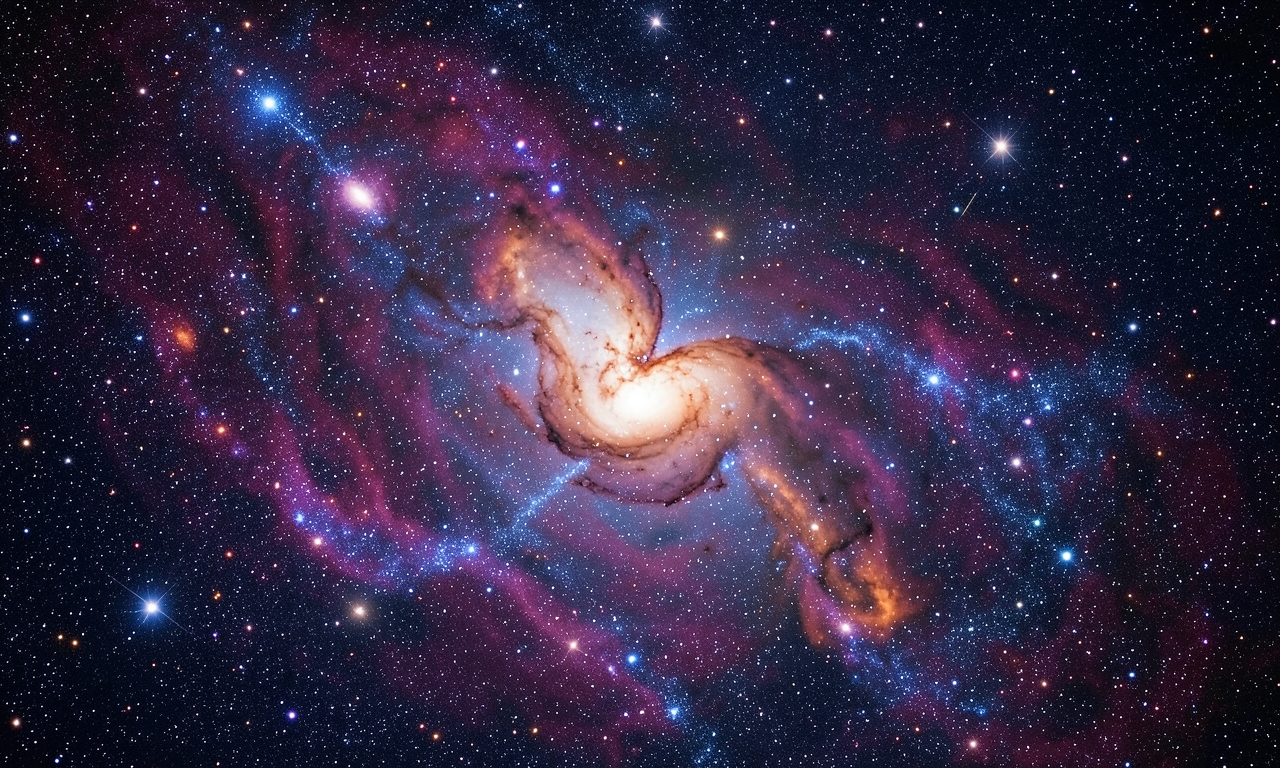
Galaxy Mergers May Not Quench Star Formation, New Simulations Suggest
For several years, astronomers have viewed galaxy mergers as a primary driver that shuts down star formation in massive galaxies.
The prevailing picture holds that when two galaxies collide, their central black holes merge and ignite a luminous quasar, whose energetic output then heats or expels the gas needed for new stars.
However, a fresh analysis of the IllustrisTNG simulation suite indicates that this quenching pathway may be less effective than previously thought.
Researchers examined dozens of simulated merger events and found that, in many cases, star formation continued at measurable levels long after the quasar phase peaked.
While some mergers still showed a decline in stellar birth rates, the overall correlation between merger‑driven quasar activity and a rapid halt in star formation was weaker than the canonical model predicts.
The findings do not rule out quasar feedback entirely, but they suggest that additional processes—such as gas recycling, stellar winds, or environmental effects—play a larger role in regulating star formation than merger‑induced quasars alone.
Future observational campaigns targeting post‑merger galaxies will be needed to test whether the simulated trends hold in the real universe.
The result also impacts how we interpret galaxy populations in surveys and may require revising semi‑analytic models that rely heavily on merger‑quasar quenching.