New Mineralogical Breakthrough
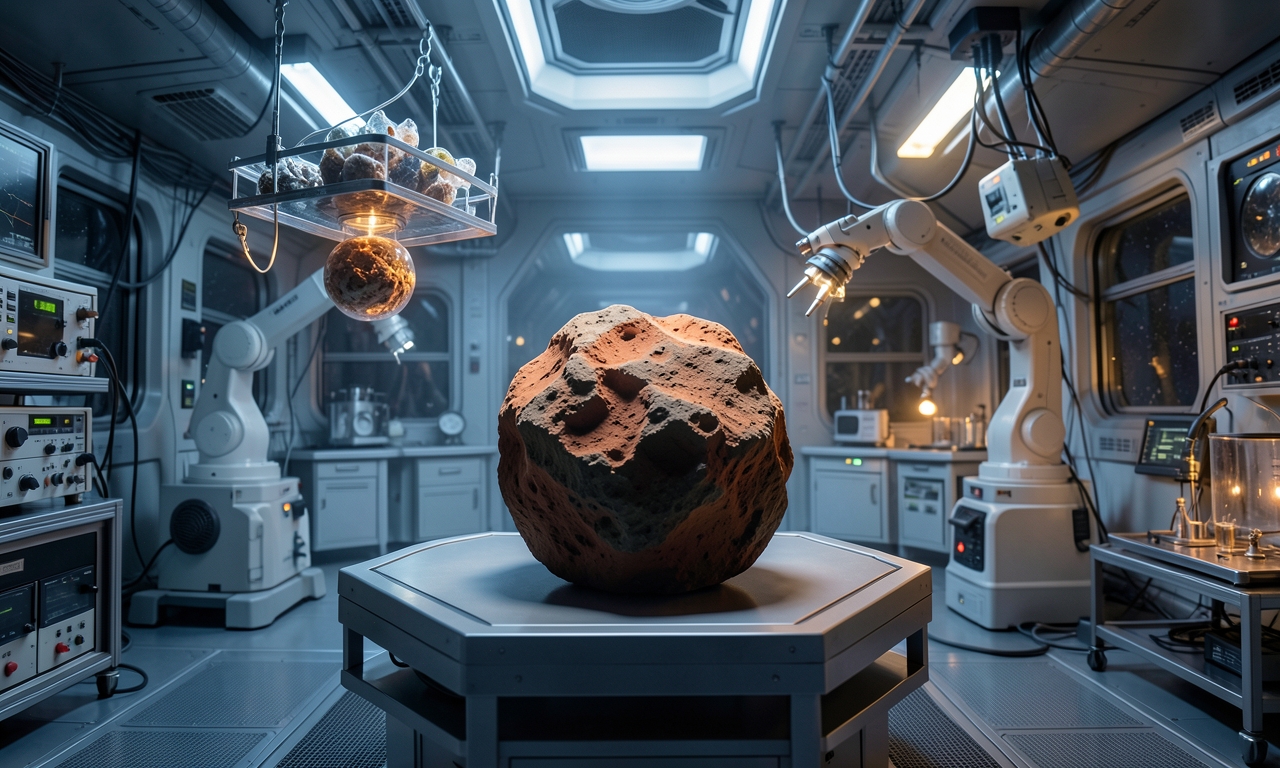
An international group of scientists has identified a previously unknown type of rock originating from Mars. For the first time, the mineral garnet was detected within a Martian sample, marking a significant milestone in the study of the red planet's composition.
Insights into Ancient Geology
The presence of garnet offers a rare opportunity to examine the geological evolution of Mars. This discovery allows researchers to better understand the processes that shaped the planet over its 4.5-billion-year history, providing clues about its early internal dynamics.
Collaborative Research Effort
The study involved a global team of experts, including James Darling, a professor of Earth and planetary science at the University of Portsmouth. Their collective analysis focuses on the specific conditions required for the formation of such minerals in a planetary environment.
Scientific Implications
By analyzing these unique rock samples, scientists can piece together the complex geological puzzle of Mars. Such findings are crucial for understanding the planet's early magmatic and tectonic activity, offering a glimpse into the deep history of the solar system's second-smallest planet.